C-DRONE GUIDE · 17 JULY 2026
Construction site theft: what a surveillance drone can really do
Nearly seven out of ten building and public works firms report being hit by at least one theft on a construction site, with an average loss running into tens of thousands of euros per incident according to industry barometers. Faced with that, many site managers search "drone construction site surveillance" picturing a flying sentinel patrolling alone all night. The French reality in 2026 is more nuanced: the drone is a remarkably effective security tool, but night-flight regulation strictly frames what a provider can actually offer. Here is what genuinely works, what remains out of reach, and what it costs.
Get up to 3 quotes from professional drone pilots in your area
Describe the mission in two steps. With your consent, it is passed on to partner professional pilots (3 at most), who contact you directly with their proposal.
Published on 17 July 2026, updated on 22 September 2026 — regulations in force as of September 2026.
Construction site theft: a scourge weighing on the industry
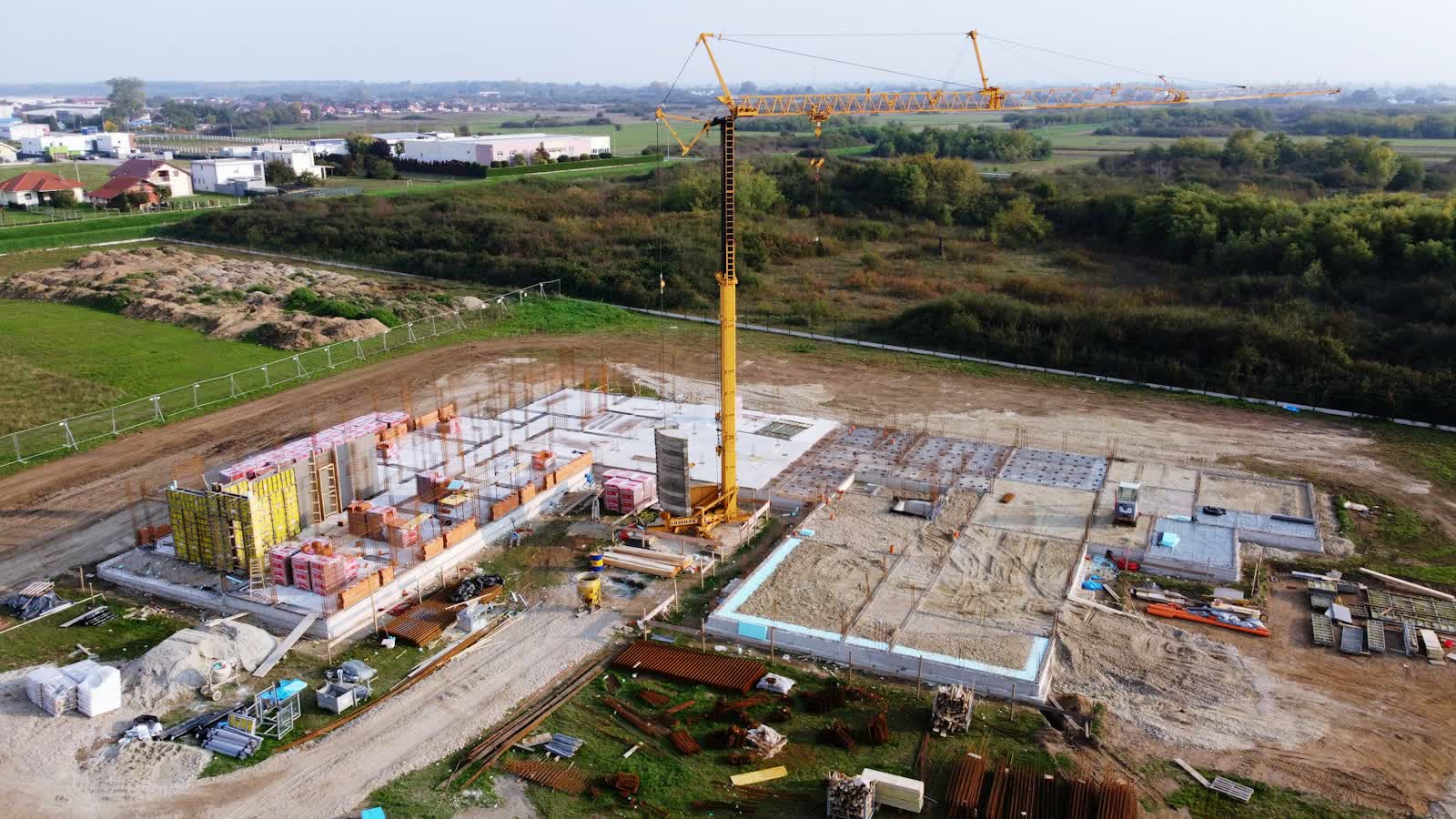
Generators, compact machinery, copper cable, power tools: a site left unwatched over a weekend or during holidays is an easy target. According to the Coyote Business Services barometer and figures relayed by the trade press (Batiweb, Argus de l'assurance), the share of construction firms hit by at least one theft has risen sharply in recent years, with an average loss per incident of roughly €30,000 to €45,000 and cumulative losses exceeding a billion euros across the sector. Easy resale of metal and machinery, the isolation of many peripheral sites and the growing number of sites running at once all explain the rise.
The damage does not stop at the missing equipment: every theft delays the schedule, eats up time on the claim and the loss adjuster's visit, and eventually pushes up the all-risks site insurance premium. Traditional measures (fencing, lighting, wired alarms) remain necessary but show their limits on a large industrial or sprawling site, where an intrusion can happen on the opposite side from the watched gate. That is what pushes a growing number of firms to look at drones.
What a drone can really add to construction site security
Where a foot patrol takes an hour to cover a large site, a drone does the round in a few minutes, carrying a thermal camera able to detect a human presence several hundred metres away even in total darkness — a decisive edge over a fixed CCTV camera whose blind spot starts a few metres from its mast. Responding to an alert triggered by a perimeter alarm, an aerial "verification" confirms or rules out an intrusion far faster than a guard who has to walk the site, with an overview no ground camera can match.
The other benefit is documentation: every flight produces geolocated, time-stamped images, admissible as evidence if a complaint is filed, provided the capture was lawful. A one-off thermal pass also reveals blind spots nobody suspected — a recess behind a stack of materials, a stretch the perimeter fence doesn't cover — and helps redesign where fixed cameras and lighting go. This is the same thermal-detection principle we detail for drone thermography, applied here to spotting people rather than heat loss.
What a drone cannot do — and why the lock is regulatory
This is where expectations need resetting. In France, night flight — defined as the period from thirty minutes after sunset to thirty minutes before sunrise — remains banned by default in the open category, with the only exception a case-by-case application to the local préfet. For a recurring use case like site surveillance, the specific category applies: since 1 January 2026, the European standard scenarios STS-01 and STS-02 have definitively replaced the former national scenarios, requiring dedicated training, a flashing green light on the aircraft and, an often-underestimated point, a mandatory daytime survey of the site to map obstacles invisible at night — cables, cranes, parked machinery.
In practice, that rules out the fully autonomous, permanent night patrol the public tends to imagine: autonomous docking stations that launch a drone unmanned at the slightest signal do exist, but they sit under a heavy authorisation framework — beyond-visual-line-of-sight flight, a SORA risk assessment — reserved for a handful of large integrators, out of reach of a one-off service. Our guide to flying a drone at night: what French law says covers this framework in full.
One-off mission or recurring setup: two ways to organise it
Within that framework, two formats cover most of a site's real needs. The one-off mission first: a pilot already declared under STS-01 or STS-02 with a night endorsement flies during an identified at-risk window — a long weekend, delivery of costly equipment, the year-end break — with several passes scheduled through the evening, a thermal flight and photographic evidence. An initial daytime vulnerability audit usefully complements this, spotting blind spots in the fencing and existing lighting.
The recurring setup comes next, suited to a large industrial or logistics site: it involves a partnership with a private security firm holding the CNAPS licence, with the drone multiplying its ground team's coverage during alarm verifications. In both cases, the flight only covers the site's private property — the public road stays out of frame, reserved for law enforcement — and follows GDPR: workers informed, capture minimised, limited retention of recordings. This is the format detailed on our drone security and surveillance page.
What a drone construction site surveillance mission costs in 2026
Prices depend on the format chosen, the area to cover and how often the drone flies. Ranges observed in France in 2026:
| Service | Observed price (excl. VAT) |
|---|---|
| Initial vulnerability audit (daytime survey, recommendations) | €400 to €700 |
| Weekend or at-risk-period surveillance (several passes, thermal flight) | €800 to €1,800 |
| One-off alarm verification (provider already declared nearby) | €150 to €350 per callout |
| Recurring setup in partnership with a security firm (subscription) | on quotation |
The main cost driver remains the regulatory declaration: an operator already registered under STS-01 or STS-02 with a night endorsement only bills for the mission itself, while a first recourse to a one-off prefectoral exception adds several weeks of lead time and an administrative surcharge. Hence the value of picking a provider already operational at night rather than starting from a blank application.
Frequently asked questions about drone construction site surveillance
Can a drone patrol my site alone all night? Not in a standard service format: that requires an autonomous, beyond-visual-line-of-sight docking station, under a heavy authorisation framework reserved for a handful of large operators. The realistic option pairs scheduled passes by a declared pilot with, on a large site, a partnership with a security firm providing continuous presence on the ground.
Can the footage be used as evidence if I file a complaint? Yes, if the capture was lawful: flight over your own property, a declared operator, workers informed. Time-stamped, geolocated recordings are then admissible and handed to law enforcement.
Can the drone watch the street or public access in front of the site? No, drone image capture of public roads is reserved for the authorities. The camera stays angled towards the inside of the site fence.
Does the drone replace traditional guarding? No, it complements it: a guard's deterrent presence or an alarm remains the base layer, with the drone adding the speed of verification and the aerial coverage no fixed post can match at this price.
Put it into practice
- Drone construction site monitoring: rates and cities covered from €250
- Drone security & surveillance: rates and cities covered from €600
- Construction site monitoring in Argenteuil Île-de-France
- Construction site monitoring in Vitry-sur-Seine Île-de-France
- Construction site monitoring in Colombes Île-de-France