🏗️ CONSTRUCTION SITE MONITORING · CARCASSONNE (11) · €250–800 LE PASSAGE
Drone construction site monitoring in Carcassonne
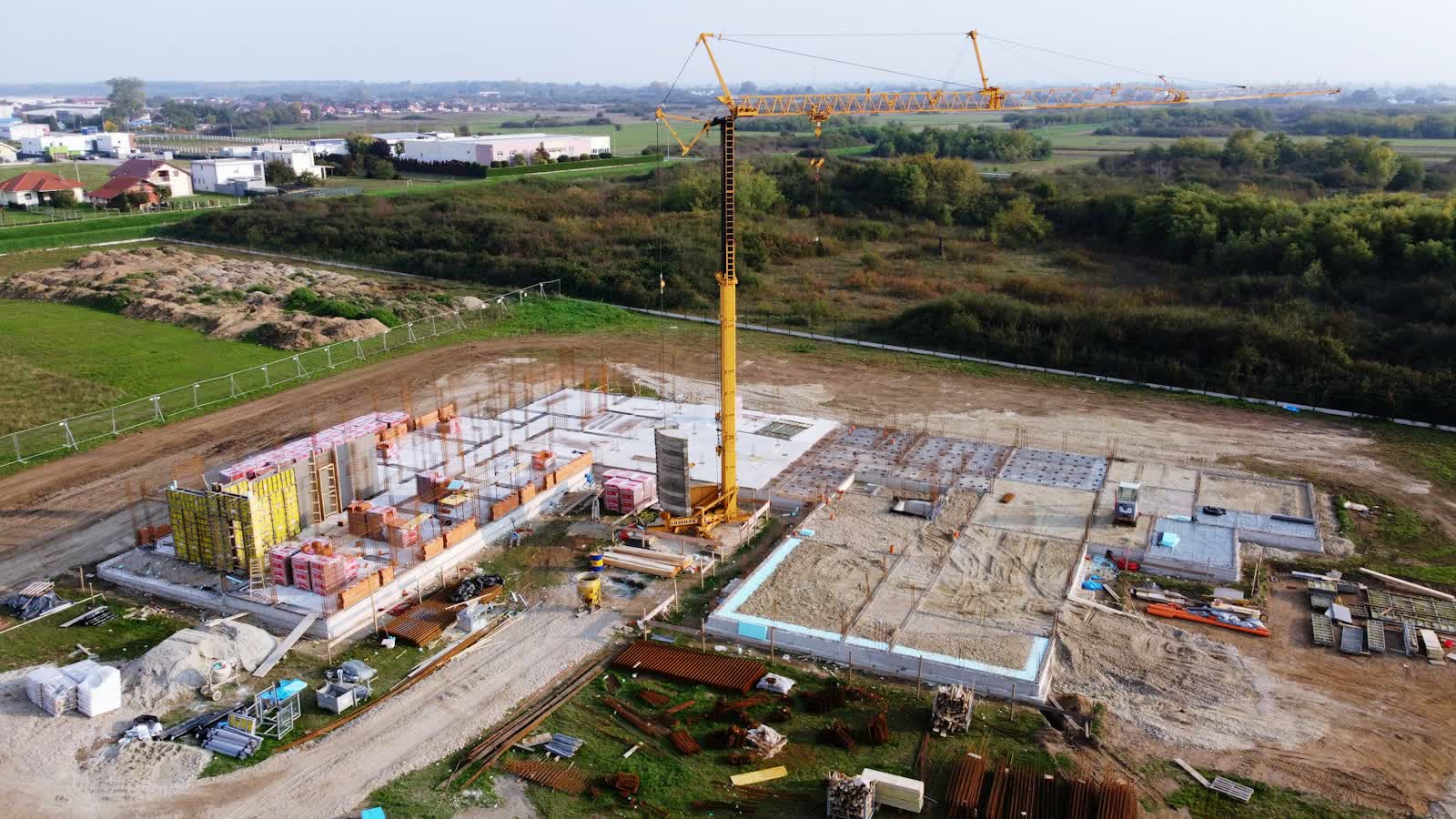
Around Carcassonne, construction spreads wide: business parks, housing estates, public facilities. From the air the whole footprint fits in one image — earthworks, cranes, stockpiles and roads — for fact-based project steering. From the town centre to the business parks, the pilots covering Carcassonne and its department (11) match equipment and flight plan to each order.
Carcassonne holds two UNESCO listings: the medieval Cité with its 52 towers restored by Viollet-le-Duc — Europe's largest fortified ensemble, 2 million visitors a year — and the Canal du Midi crossing the Saint-Louis bastide. Flying over the Cité, a heavily visited national monument, requires specific authorisations (monument administrator, prefecture); Carcassonne airport (LFMK), with regular low-cost traffic, additionally places the west of the town under its CTR. The 14 July fireworks are covered by strict bans. The Aude economy relies on heritage tourism, winegrowing (Cabardès, Malepère, Corbières) and wind power.
What the service covers in Carcassonne
- Restoration works on monuments in Carcassonne: progress records right up close to the scaffolding
- Hotel and residence builds and refits around Carcassonne, monitored out of season
- Monthly progress records for project owners and site meetings
- Monthly orthophoto that overlays onto execution drawings
Reference points in the area
These sites in Carcassonne anchor the flight plans and the framing:
- Cité de Carcassonne (UNESCO)
- Basilique Saint-Nazaire
- Pont Vieux
- Bastide Saint-Louis
- Canal du Midi (UNESCO)
Rates
€250–800 le passage — the range observed on the 2026 French market, including regulatory preparation, flight and delivery. The exact quote depends on the site, the deliverable and the airspace context in Carcassonne.
Flight rules in Carcassonne
A monitored site in Carcassonne under controlled airspace (CTR de l'aéroport de Carcassonne (LFMK)) gets a standing protocol with air traffic control: once in place, each monthly pass needs only short notice.
Site monitoring is flown within the works footprint, open category on land closed to the public; in urban areas a specific-category declaration covers the project's duration and its repeated passes. Full regulations and rates: construction site monitoring across France →
Information checked against the regulations in force as of September 2026 (EU regulations 2019/945 and 2019/947, applicable French decrees).
Frequently asked questions
Construction site monitoring in Carcassonne: what budget should you plan?
Allow €250–800 le passage — the 2026 French market range, including regulatory preparation, flight and delivery. In Carcassonne, coordination with the local airspace is included in the quote and arranged within a few days.
How often should a site in Carcassonne be flown?
The standard rhythm is monthly, tightened to fortnightly during structural work. In Occitanie, weather guides the scheduling; every flight repeats the same camera axes for rigorous month-on-month comparison.
Can the drone fly while the crane is operating?
Yes, with a protocol agreed with the crane operator: flight zones and slots defined in advance, radio contact during the flight, and never crossing the load path.
Other drone services in Carcassonne
- Precision agriculture in Carcassonne from €8/ha
- Security & surveillance in Carcassonne from €600
- Immersive FPV video in Carcassonne from €700
- High-access cleaning in Carcassonne from €500
- Drone pilot training in Carcassonne from €350
- Aerial photography in Carcassonne from €300
- Aerial video in Carcassonne from €500
- All services in Carcassonne
Construction site monitoring near Carcassonne
- Construction site monitoring in Perpignan Occitanie
- Construction site monitoring in Béziers Occitanie
- Construction site monitoring in Montauban Occitanie
- Construction site monitoring in Narbonne Occitanie
- Construction site monitoring in Albi Occitanie
- Construction site monitoring in Sète Occitanie
Construction site monitoring: every city →