DRONE OVERHEAD GUIDE · UPDATED NOVEMBER 2026
A drone over your home or site in France: record, identify, make it stop
New
For €29 VAT included (€24.17 excl. VAT): a guide for responding to a drone flying over your house, apartment building, campsite, business or municipality in France.
After payment
- The page after payment shows the link to your guide: you start reading right away.
- An email from C-DRONE (no-reply@tech-bharat.com) sends you this link again with your order details (amount, VAT, order number).
- Find my purchases gives you your links back at any time.
- No phone calls: nobody will ring you.
Guarantee: content as described, or your money back
For €120 more, the complete library: all 48 guides, this one included →
VAT included (€24.17 excl. VAT) · secure Stripe payment (card, Apple Pay, Google Pay) · terms of sale (in French)
What you get
- The online guide: 12 chapters, about 31 A4 pages, printable to PDF
- 8 ready-to-copy templates: overflight incident record · letter to an identified pilot · formal notice · report to the DSAC · complaint to the public prosecutor · letter from a resident to the managing agent · internal site procedure "drone overflight" · overflight log · and 4 more
- For: Managing agents and landlords · Campsites, hotels and leisure sites · Businesses, farms and local authorities
- Delivery: instant online access right after payment; Stripe invoice by email
- Preview: the whole first chapter, free, further down this page
12chapters
31printable A4 pages
8templates to copy
4checklist items
Checked at the source
Reviewed by industry professionals. Every rule links to its text.
322links to official texts across our guides
77automated checks before every release
November 2026latest revision of this guide
- Primary sources: Légifrance, EUR-Lex, Géoportail, DGAC, service-public.fr.
- Every figure linked to its source, dated in the last chapter.
- Dated updates: you always read the latest version.
Built on the frameworks of the European Union (regulations 2019/945 and 2019/947), EASA, the DGAC and the DSAC.
Who it is for
- Managing agents and landlords who receive complaints from residents about overflights
- Campsites, hotels and leisure sites that receive complaints from guests
- Businesses, farms and local authorities that need a written procedure for overflights
- Homeowners and second-home owners in France who see a drone returning over their garden, pool or windows
In pictures
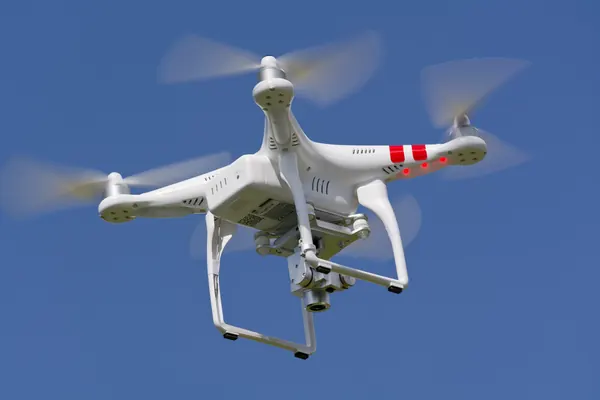
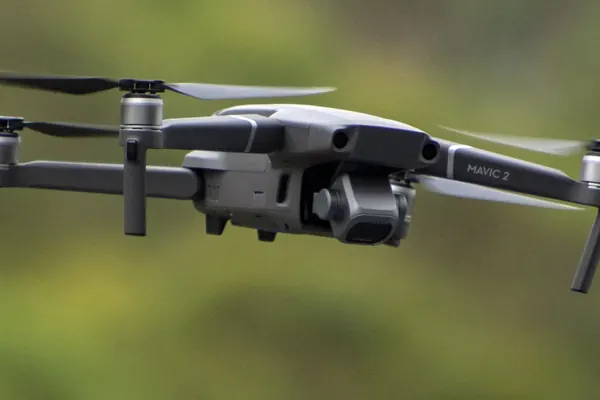
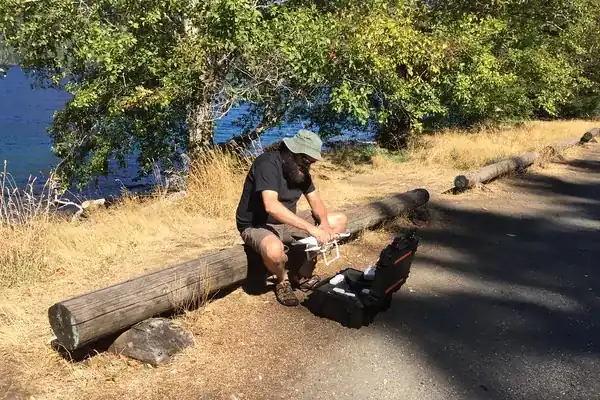
Illustrative photos, published by their authors under free licences.
Contents of the complete guide
- Lawful flight or offence: sorting it out in ten minutes (free extract below)
- In the moment: what helps and what backfires
- Building evidence: what holds and what does not
- Identifying the drone and its pilot
- What the law says: the grounds to rely on
- Stopping it amicably: letter, formal notice, conciliation
- Going to the authorities: who for what
- Apartment buildings, managing agents and landlords
- Businesses, campsites, farms and local authorities
- Planning and neighbours: when a drone is used to watch building works
- Common mistakes
- Eight templates to copy
- Sources and dates consulted
Included: 4 checklist items and 10 decision or reference tables.
Introduction
A drone that crosses a roof once is not a problem. A drone that hovers outside a bedroom, comes back three evenings in a row over a pool, circles above the pitches of a campsite or follows the fence of a warehouse at night is one. In those situations, most people make one of the two mistakes that ruin a case: they keep no usable record, or they go after the aircraft and put themselves in the wrong.
This guide sets out the full procedure under French law, from the first sighting to the end of the overflights. It is written first for those who run a place and must answer to others (managing agents, campsite operators, site managers, municipal services), then for individuals who want to act properly, including English speakers living in France or owning a holiday home there. Each step points to the text it rests on, and the guide ends with eight templates ready to fill in: the incident record, the letter to the pilot, the formal notice, the report to the DSAC, the criminal complaint, the letter to the managing agent, the internal site procedure and the overflight log.
The guide is up to date as of 3 November 2026: texts re-read on Légifrance and EUR-Lex that day. Read the chapters in order the first time; afterwards, chapter 7 (who to contact for what) and the templates are enough day to day. French authorities work in French: the letters in chapter 12 are given in English so you understand every line, with the French terms in brackets where they matter; have them translated before sending, or ask a French-speaking neighbour, the managing agent or a maison de justice to help.
Lawful flight or offence: sorting it out in ten minutes
What the law allows the pilot
The starting point often surprises people: flying over private property is not prohibited as such. Article 552 of the French civil code attaches ownership of what is above to ownership of the land, but article L6211-3 of the transport code provides that an aircraft's right to fly over private property may not be exercised in a way that would hinder the owner's rights. A drone that crosses your plot at a reasonable height, without lingering, commits no offence simply by passing.
Several perfectly legitimate flights pass over private land:
- a professional drone operator inspecting a neighbour's roof, surveying a construction site or photographing a property for sale; in built-up areas, they have in principle filed a prior notification with the préfecture (form cerfa 15476*04, at least 10 working days ahead);
- a network operator inspecting a power line, pipeline or structure;
- the police, customs or emergency services, who use drones under their own rules: for the police and gendarmerie, article L242-5 of the internal security code requires a written, reasoned authorisation from the préfet, and the devices must not target the inside of homes nor, specifically, their entrances.
What it does not allow
Everything changes with the camera and with the drone's behaviour. Four red lines cover most situations:
- Filming a person in a private place without consent: an enclosed garden, a terrace, a pool, the inside of a home seen through a window. This is the offence in article 226-1 of the criminal code, punishable by one year's imprisonment and a €45,000 fine.
- Flying over a prohibited area (around certain sensitive sites, areas set by the State): article L6232-12 of the transport code.
- Hindering the owner's rights: prolonged low hovering, repeated passes, noise. This is the ground of civil liability, and sometimes of harassment if the acts are repeated and harm health.
- Flying outside the flight rules: night flights outside an authorised framework, overflying assemblies of people, a private individual flying over public space in a built-up area, more than 120 m height in the open category.
The sorting table
| What you see | What it may be | What you do |
|---|---|---|
| A single pass, in a straight line, at a reasonable height | Transit, often lawful | Nothing, or a dated note if the place is sensitive |
| Regular back-and-forth passes over a neighbouring building, pilot visible in a hi-vis vest, cordoned-off area | Professional job | Ask the pilot what the job is; answering is in their interest |
| A hover of several seconds facing a window, a pool, a bedroom | Possible capture of images in a private place | Show your objection, film the drone, open the incident record (template 1) |
| The same drone several days running, same times | Repeated behaviour, often a neighbour | Overflight log, letter to the pilot if identified (template 2) |
| A night flight over homes or a closed site | Probable offence, or an authorised mission | Call 17 if the flight is in progress and the situation seems serious |
| A drone following the fence of an industrial site, depot or farm | Possible reconnaissance | Site procedure (chapter 9), call 17, log (template 8) |
| Images of your house or of you published online | Publication, an offence separate from capture | Time-stamped screenshots with the page address, then a removal request |
The reflex that changes everything: show that you object
Article 226-1 of the criminal code contains a sentence few people know: where an image was captured "in full view and knowledge" of the persons concerned without their objecting when they were in a position to do so, their consent is presumed. In other words, someone who sees a drone filming them by their pool and shows no reaction leaves the author an argument.
The useful gesture is simple and risk-free: make your refusal clear. Cover up or go inside, make a visible gesture of refusal towards the drone, say so out loud if the pilot is within earshot, and write it on the incident record ("objection shown at 18:42 by going inside and waving"). This is not a formality: in the text, it is what separates a person who accepted being filmed from one who did not.
Three figures to remember
- 1 year and €45,000: maximum penalty for capturing the image of a person in a private place without consent (226-1), and the same for keeping or publishing it (226-2).
- 2 years and €30,000: maximum penalty for whoever destroys or damages someone else's drone (article 322-1 of the criminal code). This one is for you, not the pilot.
- 6 years: limitation period for prosecuting a délit, the middle category of offences (article 8 of the code of criminal procedure). Nothing is so urgent that the evidence should be rushed, but images disappear quickly.
How it works
- You pay on StripeBy card, Apple Pay or Google Pay, in one go, on the checkout page hosted by Stripe: your card details never go through our servers.
- You read it right awayRight after payment, you land on the complete guide's page. Bookmark it or print it to PDF; the link and the invoice are emailed to you, and everything stays findable with “Find my purchases”, at the bottom of every page.
- Guaranteed contentAs described, or your money back: email devis@c-drone.fr and we restore access or refund you (terms of sale, in French).
Frequently asked questions
What does “A drone over your home or site in France: record, identify, make it stop” contain and how much is it?
For €29 VAT included (€24.17 excl. VAT), you get a drone over your home or site in France: record, identify, make it stop: 12 chapters online, about 31 printable A4 pages and 8 ready-to-copy templates, for responding to a drone flying over your house, apartment building, campsite, business or municipality in France: sorting a lawful flight from an offence in ten minutes, building time-stamped evidence that holds, identifying the pilot (remote identification, marking, AlphaTango), choosing between dialogue, formal notice, conciliation, police complaint and reports to the DSAC, the préfecture or the CNIL, and organising a site's response (internal procedure, overflight log).
How do I receive the guide?
Right after payment you are redirected to the complete guide's page. Bookmark it, or print it to PDF (Ctrl+P or Cmd+P, “Save as PDF”). Stripe also emails you the receipt.
Do I get an invoice?
Yes: Stripe generates the invoice and emails it. You can enter your company name and VAT number at checkout. Seller: Lacangel Group (VAT FR21995268018); prices VAT included.
Is the guide kept up to date?
Yes. The guide's page is updated when the rules change; your access stays valid and you always read the latest version.
Which texts is the guide based on?
On the official texts in force (EU regulations, French decrees and codes), cited and dated with their links: you can check every rule at its source, which is authoritative. C-DRONE is an independent publisher.
Which device can I read it on?
Computer, tablet or phone: it is a web page, with no app or account to create. Print it to PDF to archive it or share it within your team.
What guarantee do I get?
The content matches its description, or you get your money back: email devis@c-drone.fr and we restore access or refund you (terms of sale, in French). This also applies to business purchases.
Other guides
New Drone light show guide
Organising a drone light show in France: budget, permits, contract
Town, company or wedding: check whether your project works, file the prefecture application on time, compare quotes, sign a contract that deals with the weather and run the night itself
€29 incl. VAT · €24.17 excl. VAT · 11 chapters · instant access
New CATS exam prep
Passing the French CATS drone exam: course and 104 practice questions
The eight subjects of the official DGAC syllabus summarised, 64 answered and explained questions, a 40-question mock exam and a four-week revision plan, with the French terms you will meet
€24 incl. VAT · €20.00 excl. VAT · 11 chapters · instant access
New Thermography guide
Drone thermography in France: commission, check and use the report
Roofs, facades, flat roofs, solar PV: choose the right measurement window, write the specification, check the flight conditions, read the report in fifteen minutes and turn it into repair decisions
€29 incl. VAT · €24.17 excl. VAT · 11 chapters · instant access
Free articles on the topic
- A drone over my house: the 4 remedies that work in 2026
- Drone near me: how to find out who is flying it (and if it is legal)
- Drone and planning violations: what a municipality is allowed to do (and not)
Instant access to your guide after payment · terms of sale (in French). Questions before buying: devis@c-drone.fr.