A professional drone pilot for this mission Request a free quote
C-DRONE GUIDE · 19 JULY 2026
Thermal drone search for missing persons: how it works, who's involved, and the rules
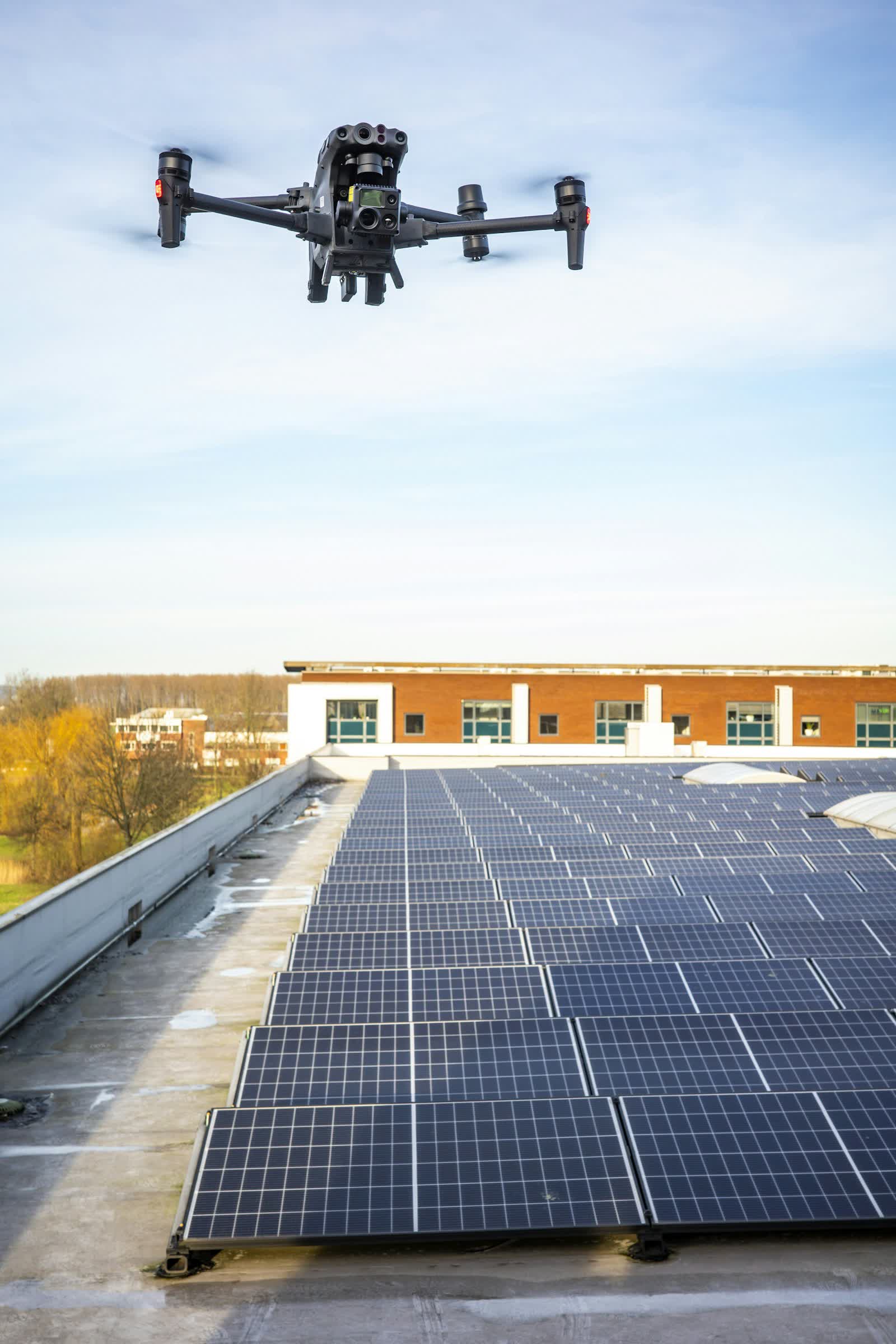
Every year in France, tens of thousands of worrying disappearances are reported — a hiker lost in the mountains, a disoriented elderly person, a child who doesn't come home on time. Since 2023, gendarmerie units and firefighters have increasingly deployed drones fitted with thermal cameras to speed up these searches, especially after nightfall or under dense forest cover. This guide explains how a thermal drone search actually works, who is authorised to fly it, where a private professional pilot fits in, and what the regulations say about this very particular kind of mission.
Published on 19 July 2026, updated on 22 September 2026 — regulations in force as of September 2026.
Why the thermal camera changes a search
A thermal camera does not capture visible light but the infrared radiation every body emits according to its temperature: a human body, at around 37 °C, stands out clearly from vegetation, rock or water as soon as the thermal gap exceeds a few degrees — which holds true at night, in light rain, or through sparse foliage that would completely hide a silhouette in normal vision. Unlike binoculars or a torch, it depends neither on ambient light nor on visual camouflage: a motionless hot spot lying in a scrubby bank, invisible from a path a few metres away, stands out clearly on the pilot's control screen.
A drone also covers a much larger area much faster than a ground team: an aerial grid pattern flown at 60-80 metres scans in a few dozen minutes a zone that would take hours to cover on foot over difficult terrain (scree, brambles, streams), without exposing rescuers themselves to the risk of the terrain at night. As soon as a hot spot matching a human silhouette is spotted, its precise GPS coordinates are relayed within seconds to the ground teams, who can then head straight there instead of continuing a blind sweep.
Who flies these drones: gendarmerie, firefighters and accredited associations
In France, a missing-person search remains a State-led operation, under the authority of the public prosecutor or the préfet depending on the case, with the gendarmerie or national police in the lead. Since 2023, several gendarmerie units have had their own drone teams equipped with thermal cameras for these missions, trained and built into their own intervention procedures. On the firefighting side, several SDIS (departmental fire and rescue services) have followed suit: the Hautes-Alpes service, for instance, prepared an operational drone unit from 2025 that went into service in 2026, specifically designed for mountain interventions where every minute of searching counts.
Alongside State services, accredited civil-security associations complete the picture when requisitioned by the authorities: Protection civile, for example, trains dedicated missing-person search teams in several départements — the Tarn is one illustration — combining a canine unit (dogs), a ground search-line unit and a drone unit. These volunteers are specifically trained for this kind of flight and act in support of the rescue services, never on their own initiative.
A private individual therefore cannot, on their own initiative, launch a private drone over an active search area without coordinating with the rescue services: beyond the legal risk (an unauthorised flight in a temporary airspace exclusion zone, interference with a rescue helicopter), an uncoordinated overflight can genuinely hinder the operation under way.
Where a private professional pilot fits in
The role of an independent professional pilot, outside the in-house units of the gendarmerie and fire services, is rarely played out on the very day of a disappearance. It is built beforehand instead, through several concrete entry points. The first is qualified volunteering within an accredited civil-security association: a drone professional who joins a unit like the one described above brings already-honed piloting skills, topped up with the association's own training. The second is the civil-security drone operator training, a specific module some pilots take to specialise in these missions, alongside our drone pilot training page.
A third, more institutional route concerns local authorities: a town hall building its municipal emergency plan can call on a provider to map risk areas beforehand (isolated hiking trails, swimming spots, communal woodland) or for joint training exercises with local rescue services — a job that is contracted in the ordinary way, like any other drone mission, on a quote basis. This same expertise in night flying and spotting overlaps with the skills used for drone site surveillance. Finally, a private operator can be formally requisitioned by the préfet for a one-off need for equipment or expertise, on the same footing as other civilian resources that can be mobilised in a crisis.
Legal framework: a mission apart
Search and rescue missions enjoy a particular status under drone regulations. Since 1 January 2026, the former French national scenarios S1, S2 and S3 have stopped being usable for most operators, replaced by the European standard scenarios STS-01 and STS-02 (see our guide to the open versus specific category). One exception remains explicitly provided for, though: search and rescue missions, firefighting, customs, police or civil-security work — or similar activities — carried out under the control and responsibility of the State stay exempt from that switch, which gives rescue services and accredited associations acting on their behalf an operational latitude an ordinary commercial operator does not have.
This exemption does not extend to the general public: outside official coordination, night flying otherwise remains strictly regulated, as we cover in our guide to night drone flights, and flying over a temporary airspace exclusion zone set up during a search operation is a separate offence, regardless of the usual open or specific category rules.
Frequently asked questions about thermal drone searches
What should you do first if a relative goes missing? Call 17 (gendarmerie/police) or 112 immediately, giving as much detail as possible (last known location, description, health condition). Do not launch a private drone search on your own initiative: it is up to the rescue services to decide whether to deploy a specialised drone unit.
Can a consumer drone really detect a person at night? Only if it is fitted with a thermal camera, which most consumer models with a standard visible-light camera are not. Even with one, a thermal drone does not replace a canine unit or a ground search line: weather, very dense vegetation cover, or the time elapsed since the disappearance can all reduce the usable thermal contrast, which is why the different resources complement one another.
Can C-DRONE be asked to help with an ongoing search? No: an active search is handled exclusively by the official rescue services and the accredited associations they requisition. C-DRONE does list providers for preventive risk-area mapping or training exercises commissioned by a local authority, however.
How do you become a volunteer pilot for this kind of mission? By joining an accredited civil-security association (Protection civile, French Red Cross, accredited radio-amateur associations) that has a drone unit, after the specific training it organises alongside the standard remote pilot certificate.
Put it into practice
- Drone aerial thermal imaging: rates and cities covered from €500
- Aerial thermal imaging in Thionville Grand Est
- Aerial thermal imaging in Agen Nouvelle-Aquitaine
- Aerial thermal imaging in Rodez Occitanie