C-DRONE GUIDE · 21 MAY 2026
Thermal drone: which model for inspection work in 2026
Not all "thermal drones" are equal, and the first criterion is neither the brand nor the price: it is radiometry. Between a camera that produces a pretty coloured image and one that actually measures a temperature in every pixel lies the difference between a gadget and an inspection tool. Here is how to read a spec sheet and which model to choose for your missions in 2026.
Get up to 3 quotes from professional drone pilots in your area
Describe the mission in two steps. With your consent, it is passed on to partner professional pilots (3 at most), who contact you directly with their proposal.
Published on 21 May 2026, updated on 22 September 2026 — regulations in force as of September 2026.
Editorial lead: The C-DRONE team
Radiometric or not: the make-or-break criterion
This is the market's number-one trap. A non-radiometric thermal camera renders a false-colour image where red is "warmer" than blue, but with no temperature value attached to the pixels. With it, you cannot tell whether a hot spot on a solar panel is at 45°C (normal in full sun) or 90°C (a serious diode fault), nor produce a report an engineering firm or an insurer can use. A radiometric camera records the temperature of every pixel in the file (R-JPEG format on DJI machines), letting you adjust emissivity, reflected temperature and alert thresholds after the flight, then annotate the images in analysis software.
For any inspection activity — buildings, solar farms, networks, leak detection — radiometry is therefore non-negotiable. It explains the price gap between a consumer "thermal vision" drone sold under €3,000 and a genuine professional tool. If the spec sheet does not explicitly mention "radiometric" or per-pixel temperature recording, walk away: you would be buying a thermometer that cannot give a temperature.
640×512 resolution and NETD: reading a spec sheet
Two figures sum up a thermal sensor's quality. Resolution first: 640×512 pixels is the professional standard in 2026. Below that (256×192, 320×256), you must fly very close to the subject to resolve a defect, which lengthens flights and degrades safety; above it (1280×1024 on high-end payloads), you cover large areas faster at the same level of detail. The practical rule: to measure an object correctly, it must span at least 3×3 pixels in the image — with a 640×512 sensor and a standard lens, that allows roughly twice the distance of a 320×256.
NETD (Noise Equivalent Temperature Difference) then measures thermal sensitivity: the smallest temperature difference the sensor can distinguish from noise. Expressed in millikelvins, it should be at or below 50 mK for professional use; the best cameras reach 30 mK and reveal insulation defects or water ingress that noisier sensors drown in grain. Complete the analysis with the measurement range (ideally -20°C to +550°C with a high-temperature mode), the frame rate (30 Hz rather than 8-9 Hz) and the presence of a usable thermal digital zoom.
The 2026 comparison: five machines that dominate the market
The thermal drone inspection market has consolidated around a few proven platforms. Here are the 2026 references, with indicative prices excluding VAT as observed in France (camera payload included, extra batteries and options excluded):
| Model | Thermal sensor | NETD | Strengths | Indicative price (excl. VAT) |
|---|---|---|---|---|
| DJI Mavic 3T | 640×512 radiometric | ≤ 50 mK | Compact, 56× zoom, pro entry ticket | €4,500 – €5,500 |
| DJI Matrice 4T | 640×512 radiometric | ≤ 50 mK | Latest sensors, assisted detection, endurance | €10,000 – €13,000 |
| DJI Matrice 30T | 640×512 radiometric | ≤ 50 mK | IP55, flies in rain, laser rangefinder | €9,000 – €12,000 |
| Autel EVO Max 4T | 640×512 radiometric | ≤ 50 mK | Non-DJI alternative, good endurance | €8,000 – €10,000 |
| DJI Matrice 350 RTK + Zenmuse H30T | 1280×1024 radiometric | ≤ 50 mK | The reference for large solar farms and industry | €25,000 – €35,000 |
The Mavic 3T remains the best value to start in building inspection; the Matrice 30T takes over as soon as you work in all weathers; the M350 + H30T pairing is only justified on large industrial and solar contracts.
Which model for which mission
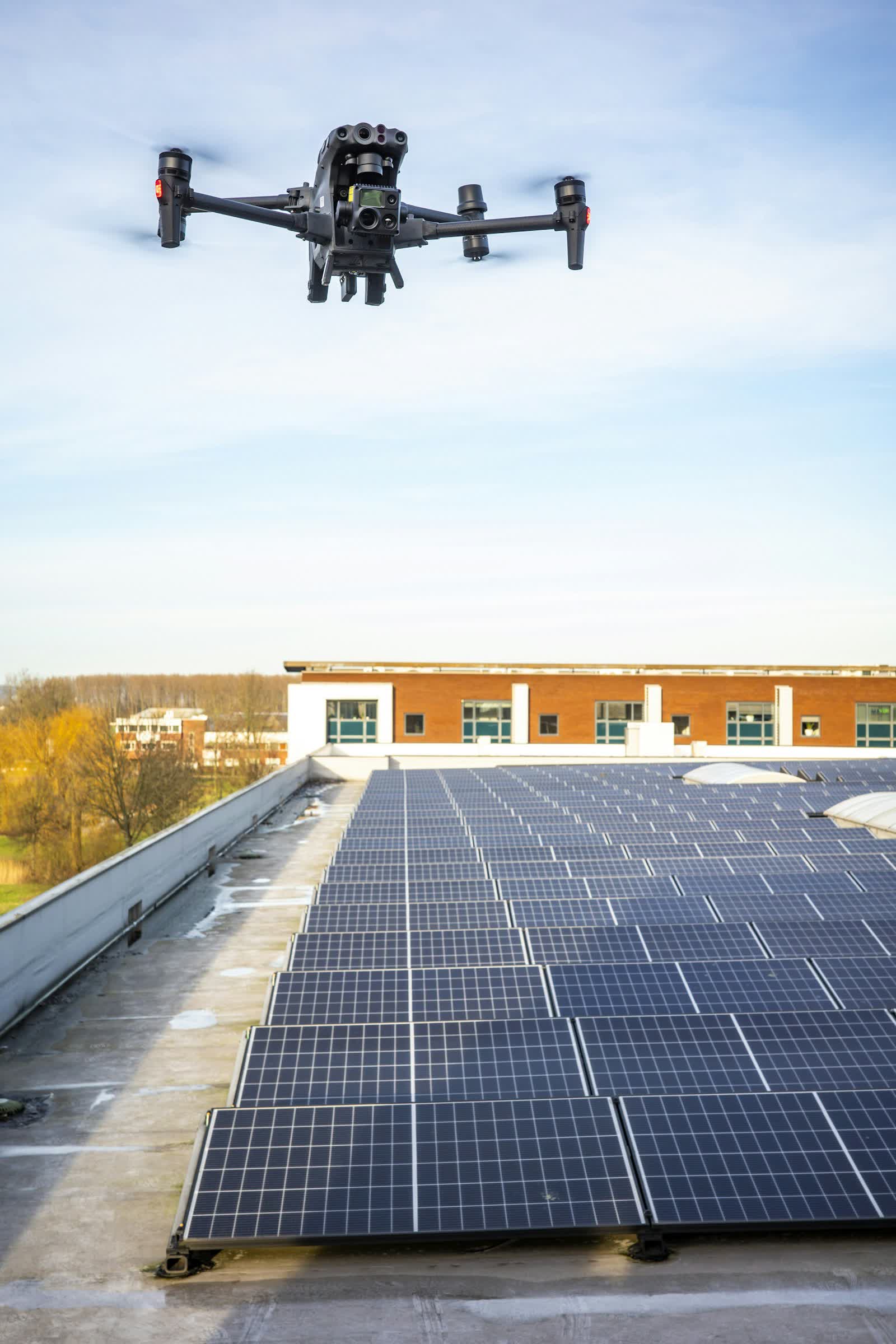
For building thermography — heat loss, water ingress, flat roofs, co-owned buildings — a Mavic 3T or a Matrice 4T is largely sufficient: areas are modest, you fly close, and compactness makes take-offs easier in dense urban areas. For solar auditing, it all depends on scale: a farm-shed roof is handled with a Mavic 3T, but a ground-mounted plant of several hectares, audited to the IEC 62446-3 standard, demands a high-resolution sensor and programmed flights — the territory of the M30T and M350. Inspection is ideally carried out with irradiance above 600 W/m², which makes summer the high season.
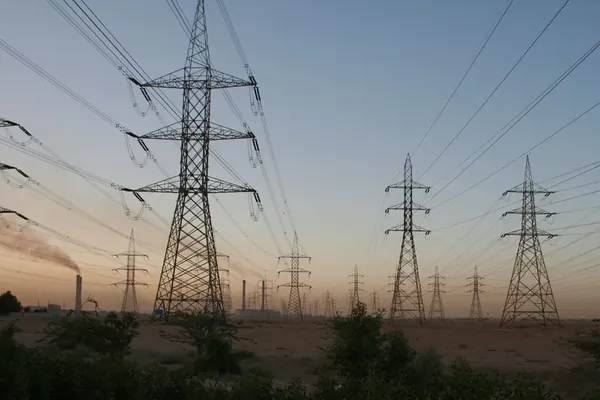
For wildlife searches (saving fawns before mowing, lost animals), sensitivity matters more than resolution: you fly at dawn when thermal contrast peaks, and a 640×512 sensor at 50 mK does the job perfectly. For industry and networks (flare stacks, power lines, chimneys), the high-temperature mode and optical zoom become decisive — you do not fly close to a flare stack. Finally, do not forget the software line: DJI Thermal Analysis Tool is free and fine to start with, while dedicated analysis and reporting suites (standards-compliant reports, tracking over time) cost €500 to €2,000 per year.
Buy or subcontract: the honest calculation
The full budget of a drone thermography activity goes far beyond the machine's price: expect €5,000 to €13,000 of equipment to start seriously, €1,500 to €3,500 of pilot training, €1,000 to €3,000 of thermographer training (essential: the camera measures, but a human interprets emissivity, reflections and thermal bridges), plus insurance and software. That is €10,000 to €20,000 in year one. On the other side of the ledger, a building thermal inspection bills at €450 to €800 and a solar audit from €750 (small installation ≤ 100 kWp) to €12,000 (large plant): the investment only pays off with a steady flow of missions.
If your need is one-off — an audit of your building, checking a suspect roof — subcontracting is unquestionably the right option: see our drone thermography page to request a quote. If you are a pilot still hesitating over the machine, our guide which professional drone to buy broadens the comparison beyond thermal, and our guide on thermography for energy renovation details the building-side methodology.
Frequently asked questions about thermal drones
Is there a cheap thermal drone worth buying? Under €3,000, cameras are almost always non-radiometric or limited to 256×192: enough to find an animal, not enough for an inspection report. The real professional entry ticket sits around €4,500 with the Mavic 3T.
What is the best season for thermography? For buildings, the heating season (November to March) with an indoor-outdoor difference of at least 10°C, early in the morning and without direct sun. For solar, it is the opposite: high summer, strong irradiance — defects heat up.
Do you need a certification to sell thermography? None is legally required, but certified thermographer training is a decisive commercial argument and a frequent requirement of B2B clients — and it prevents the interpretation errors that engage your liability.
Mavic 3T or Matrice 4T? Same thermal resolution, but the Matrice 4T adds better visual sensors, a rangefinder, longer endurance and assisted-inspection features. If the budget allows and inspection is your core business, the price gap is justified; for occasional use, the 3T is enough.
Put it into practice
- Drone aerial thermal imaging: rates and cities covered from €500
- Aerial thermal imaging in Saint-Nazaire Pays de la Loire
- Aerial thermal imaging in Quimper Bretagne
- Aerial thermal imaging in Narbonne Occitanie