C-DRONE GUIDE · 19 JULY 2026
Solar panel cleaning by drone: yield gain, method, 2026 prices
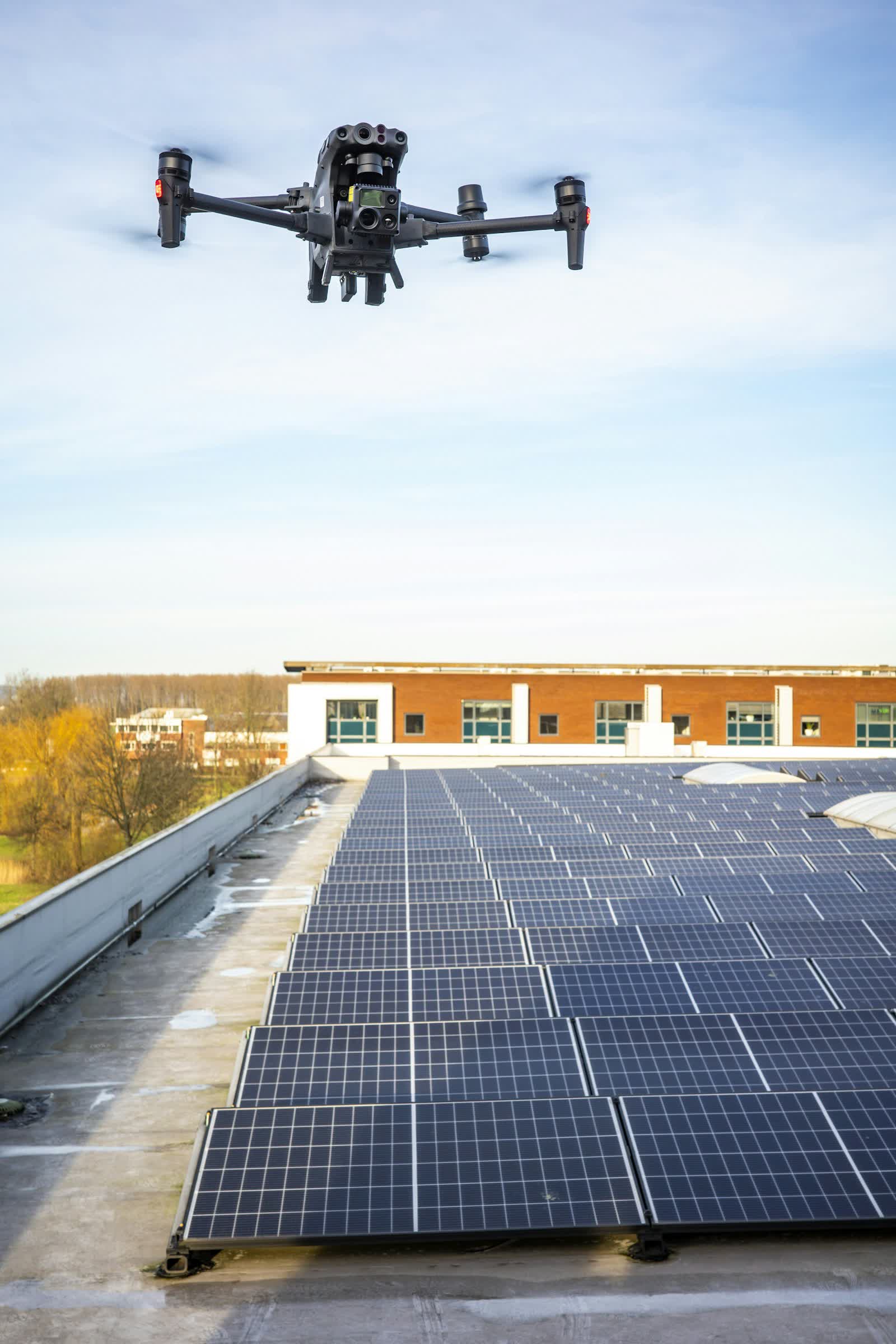
Agricultural dust, spring pollen, bird droppings, urban pollution deposits or moss in wetter regions: a photovoltaic installation loses output with nothing to flag it on the electricity bill — just a quiet gap between expected and actual production. Cleaning panels on the ground or on an easily accessible roof stays simple; on a tall roof, a car-park canopy or a ground-mounted solar farm spanning several hectares, the job becomes as much a logistics problem as a technical one. Drone cleaning, which has spread across France in recent years, answers both at once. Here is what it actually changes, how it works, and what it costs in 2026.
Get up to 3 quotes from professional drone pilots in your area
Describe the mission in two steps. With your consent, it is passed on to partner professional pilots (3 at most), who contact you directly with their proposal.
Published on 19 July 2026, updated on 22 September 2026 — regulations in force as of September 2026.
What soiling really costs in lost production
A soiled solar panel does not fail outright: it simply produces less, and that loss is easy to miss because it creeps up gradually. Industry feedback puts the average annual loss at around 5 to 15% depending on the environment (dust, pollen, road pollution, droppings), with peaks of 20% on the most exposed installations left unmaintained for several seasons. In wetter regions such as Brittany or certain mountain areas, moss and micro-algae that gradually colonise a low-pitched panel can push the loss to 25-35% of theoretical yield — biological fouling that hurts far more than a simple layer of dust, since it ends up permanently shading part of the panel.
On a farm roof, a barn or a ground-mounted solar farm, soiling is also never uniform: rows facing the prevailing wind, those at the edge of a field, or those near an unpaved road get dirty faster than the rest, creating production gaps between strings of panels that a single monthly meter reading will never reveal. An operator tracking only total monthly output can therefore lose several thousand euros a year without ever pinning down the cause.
The drone method: demineralised water, no contact, no pressure
A cleaning drone sprays a fine mist of demineralised water, sometimes with a mild detergent compatible with the panels' anti-reflective coating, without ever placing equipment or a brush on the surface. Demineralised water is not a marketing footnote: ordinary mains water, rich in limescale, leaves whitish streaks as it dries that themselves cut light transmission — a poorly done clean can degrade output rather than restore it. The absence of mechanical contact also removes the risk of micro-scratches on tempered glass or micro-cracks in the cells caused by the pressure of a foot or a motorised brush, a well-documented risk with classic manual roof cleaning.
The flight runs in a grid pattern, a few metres above the panel field, with flow and pressure calibrated to lift deposits without excessive water use: a professional job typically uses a fraction of the water a conventional high-pressure wash would need — an argument that matters more and more on farms facing summer water-use restrictions. On the most fouled installations (moss, lichen), a pre-treatment or an additional ground-level pass is sometimes still needed: the drone excels at regular maintenance, less so at scrubbing an installation neglected for several years.
Inverters, cabling, electrical safety: what the pilot coordinates
A photovoltaic installation stays a live electrical system as soon as it is exposed to sunlight, even with the inverters switched off on the grid side: each panel keeps producing direct current as long as light reaches it. Shutting down the inverters before the job is therefore recommended — less to protect the panels from water, since they are built to withstand weather, than to limit risk from any incident on the cabling or junction boxes, and to avoid an inverter tripping from a light film of water on the connectors. This is always coordinated with the plant's operator or maintenance contractor, who knows the production schedule and can pick a low-sunshine slot to limit the cost of the shutdown.
The pilot also prepares the flight like any other mission: mapping obstacles (poles, nearby overhead power lines, fences), checking the Géoportail drone map, and following the sub-category A3 rules that apply when no third parties are near a fenced ground-mounted farm. On a farm or industrial roof in a built-up area, the usual distance-from-third-parties rules, and where relevant a prior declaration for flights over public space, apply just as for any other job: our guide to open versus specific category covers that distinction.
When to clean: frequency and weather window
There is no universal schedule: the right frequency depends on the environment more than the calendar. An installation in a dusty rural area (near an unpaved track, a grain farm or a quarry) often justifies two passes a year, one after the dust-heavy summer harvest, the other at the end of winter before the spring sunshine peak. An urban roof or a ground-mounted farm in a low-dust area with regular rainfall can often get by with one pass a year, rain providing a partial natural rinse between cleanings.
The most rigorous economic logic is to compare the cost of the job against the estimated production loss rather than follow a fixed calendar: tracking output per string, or a prior thermal inspection like the one described in our guide to the annual thermal inspection of solar panels, makes it possible to pin down the point where cleaning becomes worthwhile again, rather than judging it by eye. As for weather, the flight is scheduled for dry, low-wind conditions: cleaning right before rain achieves nothing, and sustained wind scatters the spray and makes the grid pass harder to fly precisely.
The price of drone solar panel cleaning in 2026
The price mainly depends on the total panel area, how accessible it is (roof, canopy, ground) and the level of soiling found at the site survey. Ranges observed in France in 2026:
| Installation | Observed price (excl. VAT) |
|---|---|
| Residential roof or small barn (up to 9 kWc) | €350 to €600 |
| Farm or commercial roof (10 to 30 kWc) | €600 to €1,200 |
| Ground-mounted array or car-park canopy (30 to 100 kWc) | €1,200 to €2,800 |
| Large ground-mounted solar farm (several hectares, tapered per m²) | quote on request |
These amounts cover the site survey, coordination with the operator for the inverter shutdown, the flight and a visual check after the pass. For comparison, classic manual cleaning at height (a lift or a rope-access technician) is often billed higher once access becomes difficult, without removing the scratch risk that comes with direct contact. Many farm operators and plant managers now combine an annual or twice-yearly maintenance contract with tapered pricing rather than booking one-off jobs.
Frequently asked questions about drone solar panel cleaning
Does drone cleaning work on every type of panel? Yes, for most crystalline panels on a roof, canopy or ground-mounted farm. On moss or lichen well established over several years, an additional ground-level treatment is sometimes still needed alongside the aerial pass.
Do the inverters really need to be switched off? It is recommended as an electrical precaution rather than a necessity for the panels themselves, which are built to withstand rain. The pilot always coordinates this point with the operator before the flight.
What is the real gain after a clean? It depends directly on the initial level of soiling: a few percent on a well-maintained installation, up to 15-20% or more on one neglected in a dusty or humid area. A before/after production reading can quantify it precisely.
Can cleaning be combined with a thermal inspection? Yes, and it is even recommended: a thermal inspection before cleaning catches faults (hot spots, diodes, disconnected strings) that a wash alone will not fix, as covered in our guide to the annual thermal inspection of solar panels. For our other high-access cleaning services, see our drone high-access cleaning page.
Put it into practice
- Drone aerial thermal imaging: rates and cities covered from €500
- Aerial thermal imaging in Rennes Bretagne
- Aerial thermal imaging in Villeurbanne Auvergne-Rhône-Alpes
- Aerial thermal imaging in Tours Centre-Val de Loire