🫧 HIGH-ACCESS CLEANING · GRENOBLE (38) · €500–2,500 PER JOB
Drone high-access cleaning in Grenoble
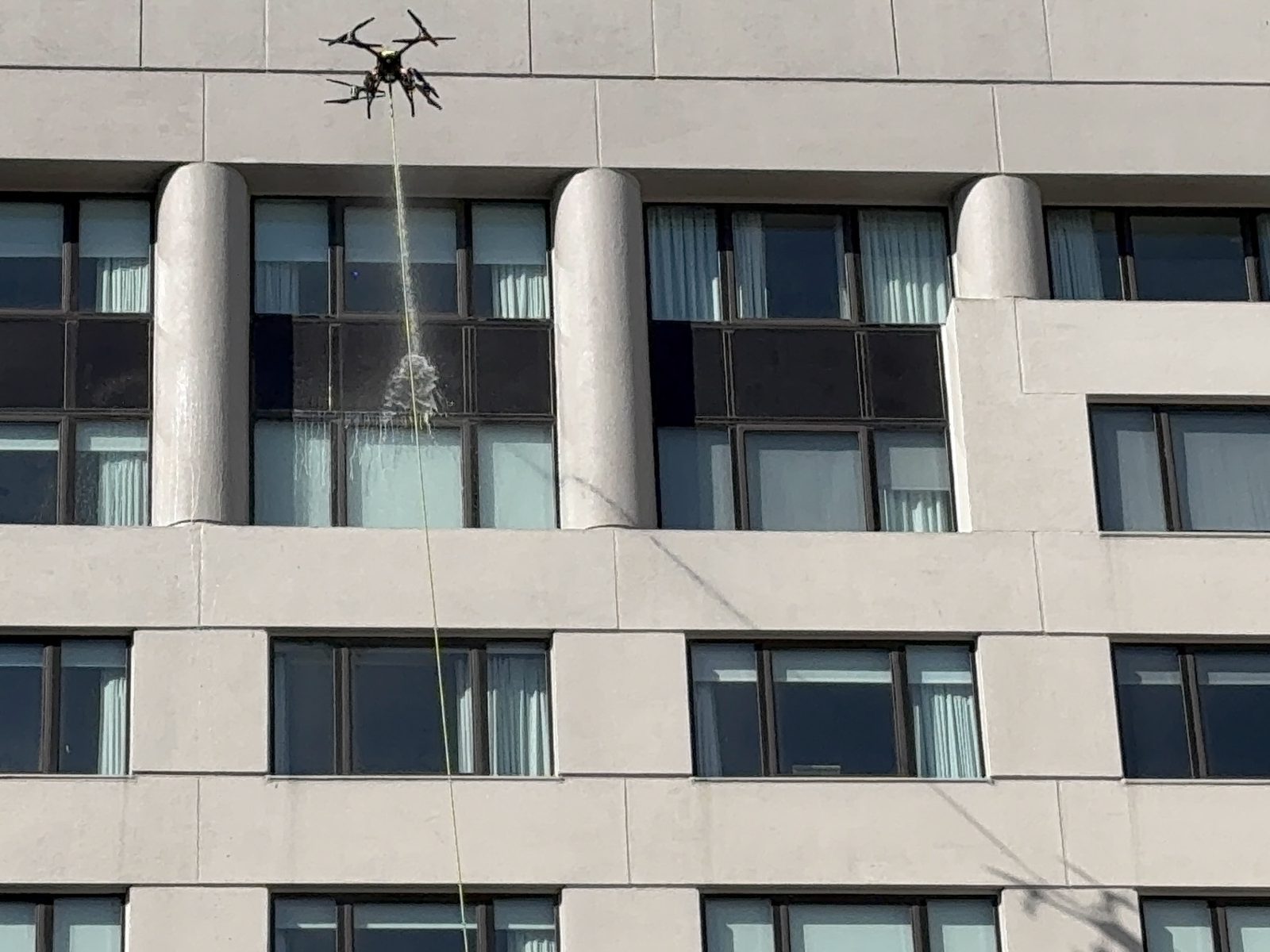
In Grenoble, moss and lichen thrive on roofs shaded by the slopes: the drone treats steep, slippery coverings without a single rope-access technician having to set foot on them. From Musée de Grenoble to the outlying districts, our pilots know the terrain of Grenoble and prepare every flight on the local aeronautical chart.
Grenoble carries a rare constraint: the scientific peninsula (CEA, the Laue-Langevin Institute reactor, the ESRF synchrotron) is under a permanent no-fly zone. Add the Le Versoud airfield to the north-east, heavy mountain-rescue helicopter traffic and relief (Vercors, Chartreuse, Belledonne) that channels winds and radio links. The 120-metre rule is measured from ground level — a key point on steep terrain. The Grenoble market is both high-tech and alpine: industrial inspections for microelectronics (STMicroelectronics, Soitec), thermography of a housing stock deep into energy retrofits, construction monitoring on scarce land, and imagery of the Bastille, its cable cars and nearby resorts for year-round tourism.
Typical missions in Grenoble
- Industrial cladding, sawtooth roofs and photovoltaic panels cleaned by drone
- Moss removal on residential blocks and office façade cleaning without a cherry picker
- Maintenance of silos, water towers and tall structures
- Applying water repellent to roofs after moss removal
Sites and landmarks in Grenoble
To prepare flights in Grenoble (157,477 inhabitants, Auvergne-Rhône-Alpes), the pilot relies on landmarks such as:
- Fort de la Bastille et ses bulles
- Musée de Grenoble
- Cathédrale Notre-Dame
- Tour Perret
- Massifs du Vercors et de la Chartreuse en toile de fond
Rates
€500–2,500 per job — the range observed on the 2026 French market, including regulatory preparation, flight and delivery. Pricing reflects the conditions in Grenoble: area, access constraints, any authorisations and the delivery format.
Airspace and formalities in Grenoble
In Grenoble, a drone-cleaning job inside the regulated perimeter (Zone interdite de la presqu'île scientifique (CEA, ILL, ESRF)) is declared like any flight: once authorised, spraying happens directly over the building, without encroaching on public space.
Drone cleaning combines aviation rules (flight directly over the building, open or specific category depending on the zone) and site best practice: ground safety perimeter, material-appropriate products, no spray drift. Full regulations and rates: high-access cleaning across France →
Information checked against the regulations in force as of September 2026 (EU regulations 2019/945 and 2019/947, applicable French decrees).
Frequently asked questions
High-access cleaning in Grenoble: what budget should you plan?
Allow €500–2,500 per job — the 2026 French market range, including regulatory preparation, flight and delivery. Build the overflight-authorisation lead time for Grenoble into your schedule: several weeks depending on the case.
Does drone cleaning damage roofs in Grenoble?
No — quite the opposite: low-pressure spraying is far gentler than a pressure washer, and nobody walks on the tiles. On Auvergne-Rhône-Alpes buildings — tiles, slates or steel decks — the anti-moss treatment is dosed to the material, with delayed rinsing to let it work.
Does drone cleaning damage tiles or panels?
No: pressure is adjusted to the substrate (low pressure on tiles and panels, never destructive high pressure) and the drone never touches the surface — unlike foot traffic, which cracks tiles.
Other drone services in Grenoble
- Drone pilot training in Grenoble from €350
- Aerial photography in Grenoble from €300
- Aerial video in Grenoble from €500
- Real estate drone services in Grenoble from €250
- Weddings & events in Grenoble from €400
- Roof inspection in Grenoble from €200
- Facade inspection in Grenoble from €300
- All services in Grenoble
High-access cleaning near Grenoble
- High-access cleaning in Clermont-Ferrand Auvergne-Rhône-Alpes
- High-access cleaning in Annecy Auvergne-Rhône-Alpes
- High-access cleaning in Valence Auvergne-Rhône-Alpes
- High-access cleaning in Chambéry Auvergne-Rhône-Alpes
- High-access cleaning in Bourg-en-Bresse Auvergne-Rhône-Alpes
- High-access cleaning in Annemasse Auvergne-Rhône-Alpes
High-access cleaning: every city →