🏢 FACADE INSPECTION · GRENOBLE (38) · €300–1,200 PER JOB
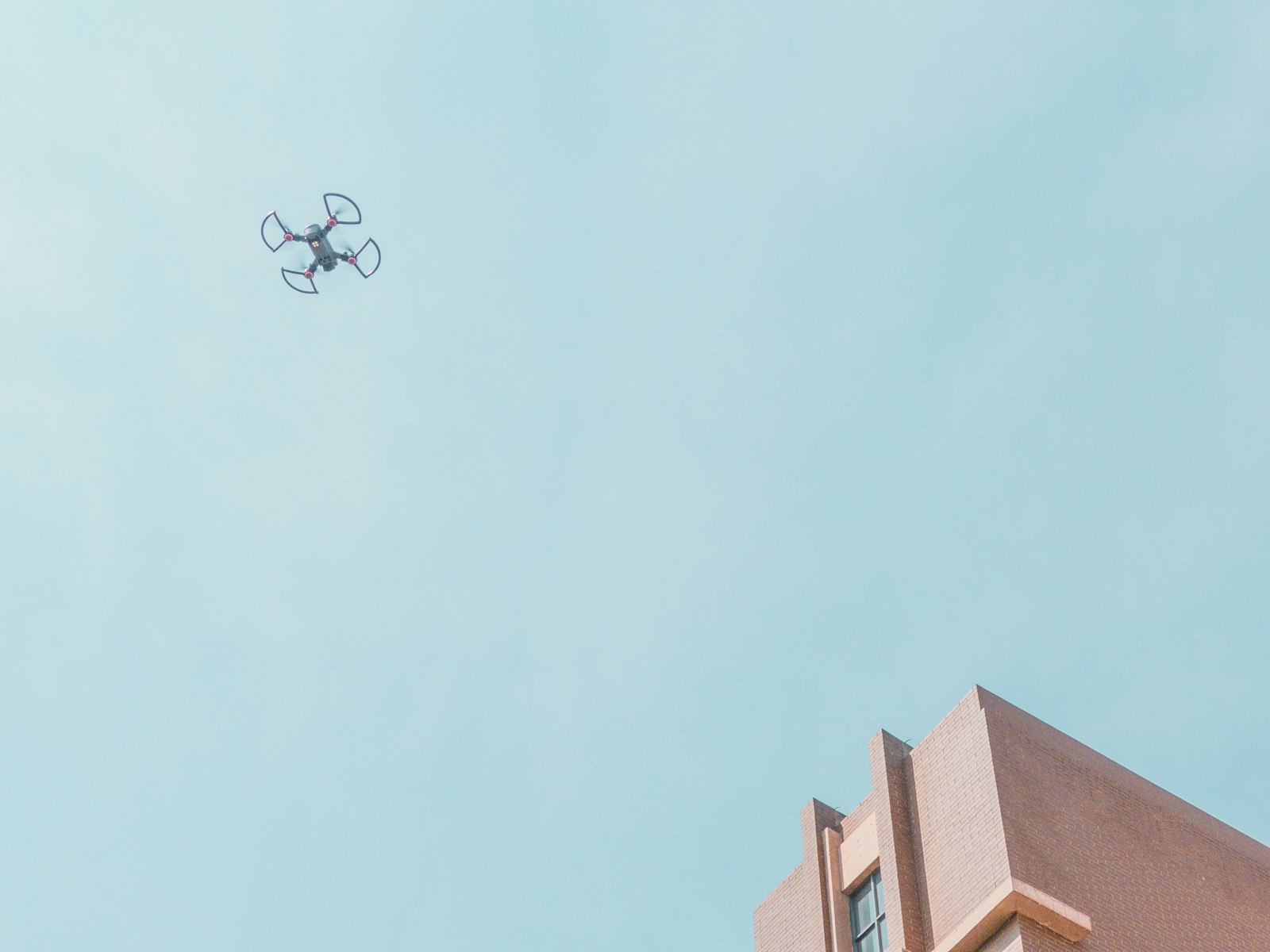
Drone facade inspection in Grenoble
In Grenoble, freeze-thaw cycles crack render and stonework: the drone records the damage in close-up over the full height, even on buildings set against the slope that conventional access barely reaches. From Fort de la Bastille et ses bulles to the outlying districts, our pilots know the terrain of Grenoble and prepare every flight on the local aeronautical chart.
Grenoble carries a rare constraint: the scientific peninsula (CEA, the Laue-Langevin Institute reactor, the ESRF synchrotron) is under a permanent no-fly zone. Add the Le Versoud airfield to the north-east, heavy mountain-rescue helicopter traffic and relief (Vercors, Chartreuse, Belledonne) that channels winds and radio links. The 120-metre rule is measured from ground level — a key point on steep terrain. The Grenoble market is both high-tech and alpine: industrial inspections for microelectronics (STMicroelectronics, Soitec), thermography of a housing stock deep into energy retrofits, construction monitoring on scarce land, and imagery of the Bastille, its cable cars and nearby resorts for year-round tourism.
Typical missions in Grenoble
- Façade surveys of offices, high-rises and residential blocks for managing agents and asset managers
- Façade checks on hotels and residences before renovation works or at season's end
- Facade orthophoto for an engineering office or architect
- Mandatory periodic monitoring of high-rise buildings
Local landmarks in Grenoble
To prepare flights in Grenoble (157,477 inhabitants, Auvergne-Rhône-Alpes), the pilot relies on landmarks such as:
- Fort de la Bastille et ses bulles
- Musée de Grenoble
- Cathédrale Notre-Dame
- Tour Perret
- Massifs du Vercors et de la Chartreuse en toile de fond
Rates
€300–1,200 per job — the range observed on the 2026 French market, including regulatory preparation, flight and delivery. Every mission in Grenoble is priced on its own facts: area to cover, flight height, expected deliverable and local formalities.
Flying in Grenoble: the local framework
In Grenoble, façade inspection inside the no-fly area (Zone interdite de la presqu'île scientifique (CEA, ILL, ESRF)) needs authorisation even a few metres from the building: we prepare the file with the managing agent or client and set the date once cleared.
Façade inspection is flown close to the building, generally in the specific category in town (prior declaration) with a ground safety perimeter; outside built-up areas the open category is usually enough. Full regulations and rates: facade inspection across France →
Information checked against the regulations in force as of September 2026 (EU regulations 2019/945 and 2019/947, applicable French decrees).
Frequently asked questions
Facade inspection in Grenoble: what budget should you plan?
Allow €300–1,200 per job — the 2026 French market range, including regulatory preparation, flight and delivery. Build the overflight-authorisation lead time for Grenoble into your schedule: several weeks depending on the case.
Does the drone replace scaffolding for a façade survey in Grenoble?
For the survey itself, yes in most cases: the drone photographs every defect in high definition from base to cornice, at a fraction of scaffolding cost. If contact testing proves necessary, the report pinpoints where — a real saving for buildings in Grenoble.
How accurate is the photographic survey?
At 5 m from the facade, resolution reaches roughly 1 mm per pixel: microcracks, joint defects and early corrosion are clearly identifiable and measurable on the images.
Other drone services in Grenoble
- Immersive FPV video in Grenoble from €700
- High-access cleaning in Grenoble from €500
- Drone pilot training in Grenoble from €350
- Aerial photography in Grenoble from €300
- Aerial video in Grenoble from €500
- Real estate drone services in Grenoble from €250
- Weddings & events in Grenoble from €400
- All services in Grenoble
Facade inspection near Grenoble
- Facade inspection in Marseille Provence-Alpes-Côte d'Azur
- Facade inspection in Lyon Auvergne-Rhône-Alpes
- Facade inspection in Saint-Étienne Auvergne-Rhône-Alpes
- Facade inspection in Villeurbanne Auvergne-Rhône-Alpes
- Facade inspection in Clermont-Ferrand Auvergne-Rhône-Alpes
- Facade inspection in Annecy Auvergne-Rhône-Alpes
Facade inspection: every city →