A professional drone pilot for this mission Request a free quote
C-DRONE GUIDE · 29 JULY 2026
Aquatic centre and indoor pool drone thermography: method, price
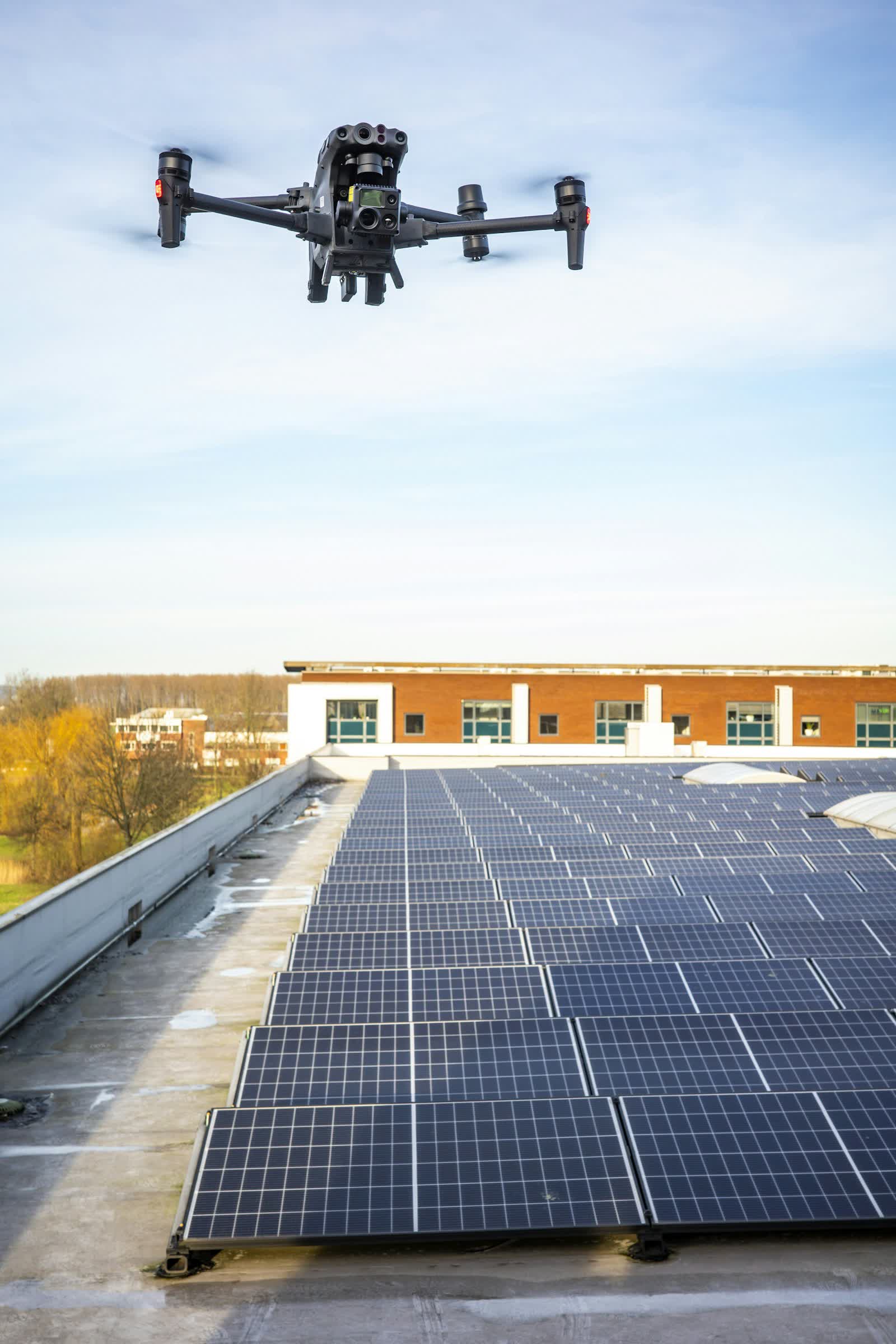
An aquatic centre heats pools to 27 or 28°C, keeps the air warmer still and saturated with moisture, and runs seven days a week, twelve months a year: per square metre it is one of the most energy-hungry public facilities, and a top spending line for the authorities that operate one. Every envelope defect — a leaky glazed roof, degraded roof insulation, a structural thermal bridge — is paid for at full price, all year round. Drone thermography, done in one winter morning without closing the facility, maps these defects across the whole envelope, roof included; the same flight documents the condition of a covering that ages fast above a chlorinated atmosphere. Here is what the mission reveals, how it unfolds, and prices observed in 2026.
Published on 29 July 2026, updated on 22 September 2026 — regulations in force as of September 2026.
The costliest public building per square metre
An indoor pool's energy balance has nothing in common with a school's or a gym's: you heat the water, heat the air above it to limit evaporation, renew that air constantly to remove moisture and chloramines, then start again. Every envelope loss adds to that base load — and unlike an office, there is no weekend and no shoulder season. That is why aquatic centres top local authorities' renovation priorities, and sit squarely within the French tertiary decree and its reduction milestones.
Before committing works that run into millions, you must know where the heat goes. That is the question envelope thermography answers — the same approach as for any tertiary building, applied to a case where every lost kilowatt-hour counts double.
What thermography shows on a pool envelope
Seen from above in cold weather, a working aquatic centre is spectacular: the thermal camera reads leaks from the glazed roof and frames (dead seals, degraded glazing, thermally bridging frames), roof areas where insulation is wet or slumped — condensed water in a pool's insulation is a classic —, thermal bridges at parapets and beams, ventilation outlets short-circuiting the heat exchanger. The hierarchy of defects leaps out, and with it the order of works.
The method has its rules: sufficient indoor-outdoor temperature difference, no direct sun, no rain, building in normal operation. A review by Elena Lucchi published in 2018 in Renewable and Sustainable Energy Reviews synthesises the uses of infrared thermography in building energy audits and their validity conditions (see the study): a serious report documents these conditions image by image, as we do for every mission described in our thermography for energy renovation guide.
The roof above the chlorine: accelerated ageing
A pool's indoor atmosphere — heat, saturating humidity, chlorine compounds — is one of the most aggressive environments a building envelope can face. Inside, it attacks fixings and assemblies; outside, the covering endures repeated condensation and thermal cycling. The visual part of the mission documents in high resolution the state of the covering and rooflights: corroded sheets and fixings, tired seals, cracked domes, cluttered gutters — the same examination as for stadiums and sports halls, whose long spans aquatic centres share.
These external findings target the internal checks the authority then entrusts to its inspection body — structure, fixings, suspended equipment —, which remain outside the drone's scope but benefit from being guided by its images.
A mission without closing the facility
Everything happens outside: the mission closes neither pool nor changing room. The ideal slot is a cold winter morning before opening time — building heating, no swimmers, no low sun on the measured façades. In built-up areas the flight follows the scenarios described in our flying in cities guide; the operator simply informs staff and immediate neighbours. One hour of flight covers a standard aquatic centre, thermography and high-resolution photos included.
The report delivers three things: a ranked heat-loss map, a covering condition survey, and classified recommendations — no-works adjustments, small interventions, major works to programme. If a pool or buried network leak is suspected, the approach switches to our pool leak detection guide.
Prices observed in 2026
Ranges observed in 2026 (excl. VAT):
- Envelope thermography of an indoor pool (roof, façades, glazing, ranked report): €800 to €1,600.
- Combined thermal + covering inspection: €1,100 to €2,200 depending on size.
- Large aquatic centre (several halls, slides, wellness areas): €1,800 to €3,500.
- Post-works follow-up thermography (verifying the result): €600 to €1,200.
Positioned upstream of an energy audit or a renovation contract, the mission pays for itself out of the first savings. Our thermal imaging drone page presents the service; request a quote stating the facility's floor area and heating season.
Put it into practice
- Drone aerial thermal imaging: rates and cities covered from €500
- Aerial thermal imaging in Rouen Normandie
- Aerial thermal imaging in Tourcoing Hauts-de-France
- Aerial thermal imaging in Poitiers Nouvelle-Aquitaine