A professional drone pilot for this mission Request a free quote
C-DRONE GUIDE · 30 JULY 2026
Drones for roofers: quoting a roof without climbing, price
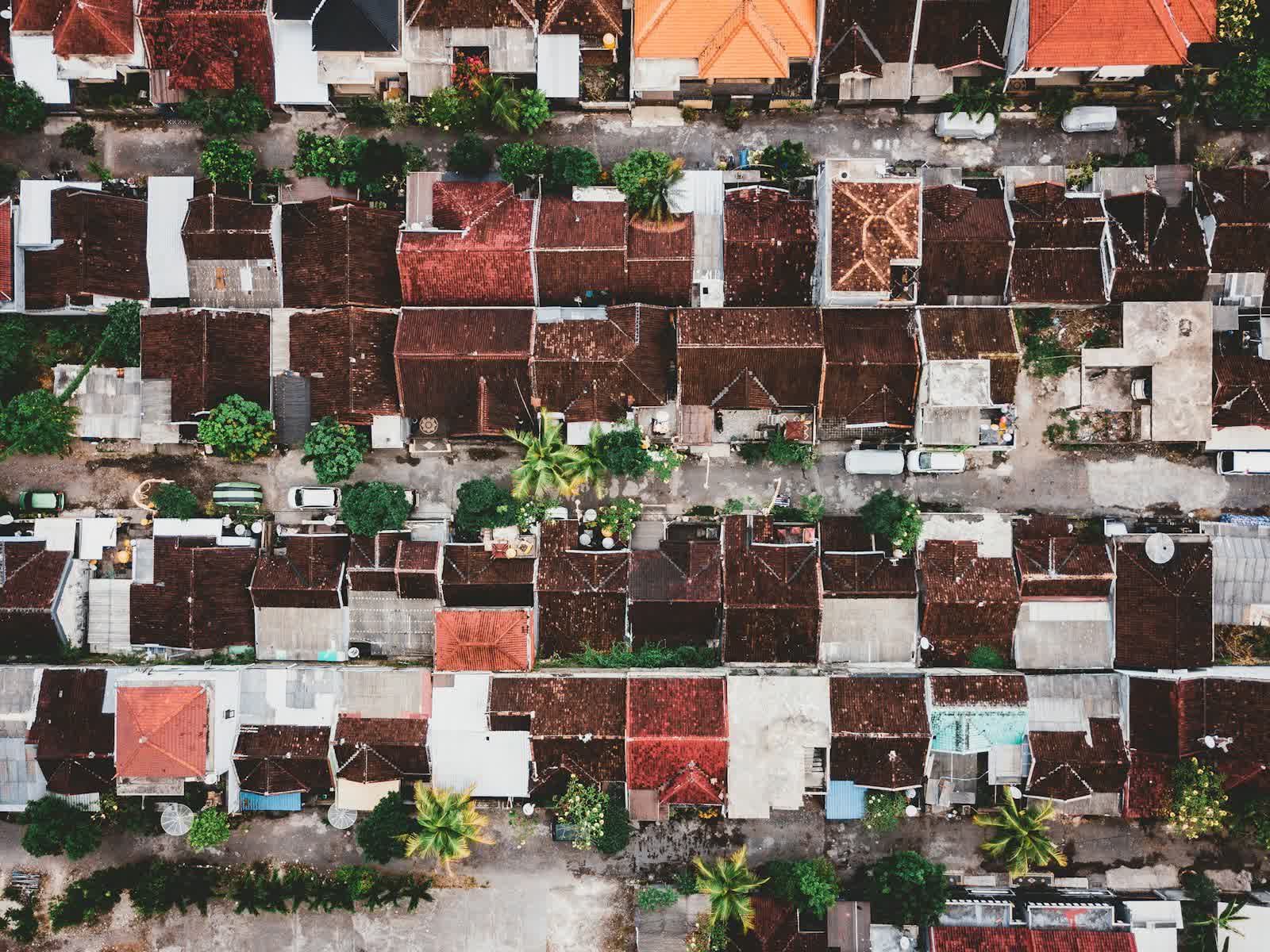
For a roofer, every quote starts with a logistics problem: seeing the roof. Climbing a ladder for an estimate that may never be signed, mobilising a cherry picker to count tiles, walking a wet roof because a customer worries after a windstorm — pre-sales burns dangerous, unbilled hours. The drone has flipped that equation: ten minutes of flight document an entire roof, valleys and stacks included, without touching the building. Tradespeople who have equipped themselves — or listed a drone pilot — quote faster, sell better and protect themselves in disputes. Here are the proven uses, the in-house-or-outsource question, and prices observed in 2026.
Published on 30 July 2026, updated on 22 September 2026 — regulations in force as of September 2026.
Pre-sales: seeing before climbing, quoting without risk
The first gain is brutally simple: no more climbing just to look. Roofing is one of construction's most accident-prone trades — a study by Xiuwen Sue Dong and co-authors published in 2013 in the Journal of Safety Research showed that falls from roofs account for a major share of fatal falls in construction, with small firms and roofers markedly overexposed (see the study). Yet a share of those climbs is far from essential: estimation visits, doubt-clearing checks, visual controls.
The drone replaces nearly all of them: high-resolution photos of every slope, zooms on singular points — ridge, flashings, valleys, stacks —, area and pitch measurements sufficient for a quote. The estimate rests on images shown to the customer on the spot, which changes the sales conversation: you no longer describe a defect invisible from the ground, you show it. The economic comparison with traditional access is detailed in our drone vs cherry picker guide.
During and after works: documenting, accepting, defending
The second use protects the tradesperson over time. A pre-works flight freezes the initial state — including neighbouring structures: the neighbour's already-cracked veranda, the already-bent gutter, so many future claims defused. A post-works flight documents the finished work from every angle: the photo attached to the invoice, the argument in case of dispute, and dated evidence if a defect appears years later — the traceability that matters when the ten-year warranty comes into play.
In between, on long jobs, phase photos (underlay laid, battening in progress) build a follow-up file appreciated by project managers and insurers. A frequent special case: asbestos-cement roofs, where any intervention must be prepared — the flight documents surface condition without any contact, as detailed in our asbestos roof survey guide. And for leak searches on flat roofs, thermography takes over, following our flat-roof leak detection guide.
Bring it in-house or call a drone pilot?
For estimation flights over detached houses, going in-house is accessible: a sub-900 g drone, operator registration, the online A1/A3 training completed by the A2 certificate to approach dwellings — the path detailed in our A1/A3 training and A2 certificate guide — and professional liability insurance covering aerial activity. The investment runs to a few thousand euros and pays back through saved estimation visits.
But in-house quickly meets its limits: dense town centres where flight requires the specific category, condominiums, tall buildings, thermography — missions that justify a listed professional pilot, called case by case. Many firms mix both: the company drone for suburban pre-sales, the contractor for the rest. The trade-off criteria — flight volume, intervention zones, the cost of keeping skills current — are detailed in our in-house or outsource guide.
What the end customer gains — and what the tradesperson bills
On the customer side, the benefit is twofold: a visible diagnosis — annotated photos of their own roof attached to the quote — and fairer pricing, based on measured rather than pavement-estimated areas. Homeowners wanting an independent condition report before committing to works, or before a purchase, will find the approach in our roof check before buying guide; the tradesperson has every interest in relying on the same standard of evidence.
On the tradesperson's side, drone inspection becomes a service line in its own right: the photographic diagnosis is billed — often deducted from the quote if the job is signed — and builds loyalty with property managers and agencies that need regular roof condition reports. It is a profitable entry product: our roof inspection drone page describes the typical service and deliverables.
Prices observed in 2026
Ranges observed in 2026 (excl. VAT):
- House roof inspection by a drone pilot (annotated photo report): €200 to €400.
- Pooled round for a tradesperson (3 to 5 roofs in one area): €90 to €150 per roof.
- Before/after works flights (baseline + acceptance, dated file): €300 to €600 for both passes.
- In-house equipment (sub-900 g drone, A1/A3 + A2 training, insurance): €2,000 to €4,000 in year one.
Tall buildings, town centres and thermography are dedicated missions, priced separately. Request a quote stating your intervention area, monthly quoting volume and building types.
Put it into practice
- Drone roof inspection: rates and cities covered from €200
- Roof inspection in Mont-de-Marsan Nouvelle-Aquitaine
- Roof inspection in Toulouse Occitanie
- Roof inspection in Rennes Bretagne