A professional drone pilot for this mission Request a free quote
C-DRONE GUIDE · 5 AUGUST 2026
Monitoring a ground-mounted solar farm construction by drone: progress, commissioning, prices
A ground-mounted solar plant is a peculiar kind of construction site: dozens of hectares, tens of thousands of driven piles, racking tables and modules — repetitive work whose progress is measured by counting. The developer wants reliable figures for boards and banks, the EPC contractor wants objective progress from its subcontractors, and everyone wants to catch early what will cost dearly later: piles out of tolerance, flooded areas, cables laid without as-built records. The drone is the natural tool for this horizontal site: a weekly or monthly orthophoto says more than every report combined, and it can literally be counted. Here is the typical set-up, from ground preparation to commissioning thermography.
Published on 5 August 2026, updated on 22 September 2026 — regulations in force as of September 2026.
From earthworks to piles: the phase where everything is decided
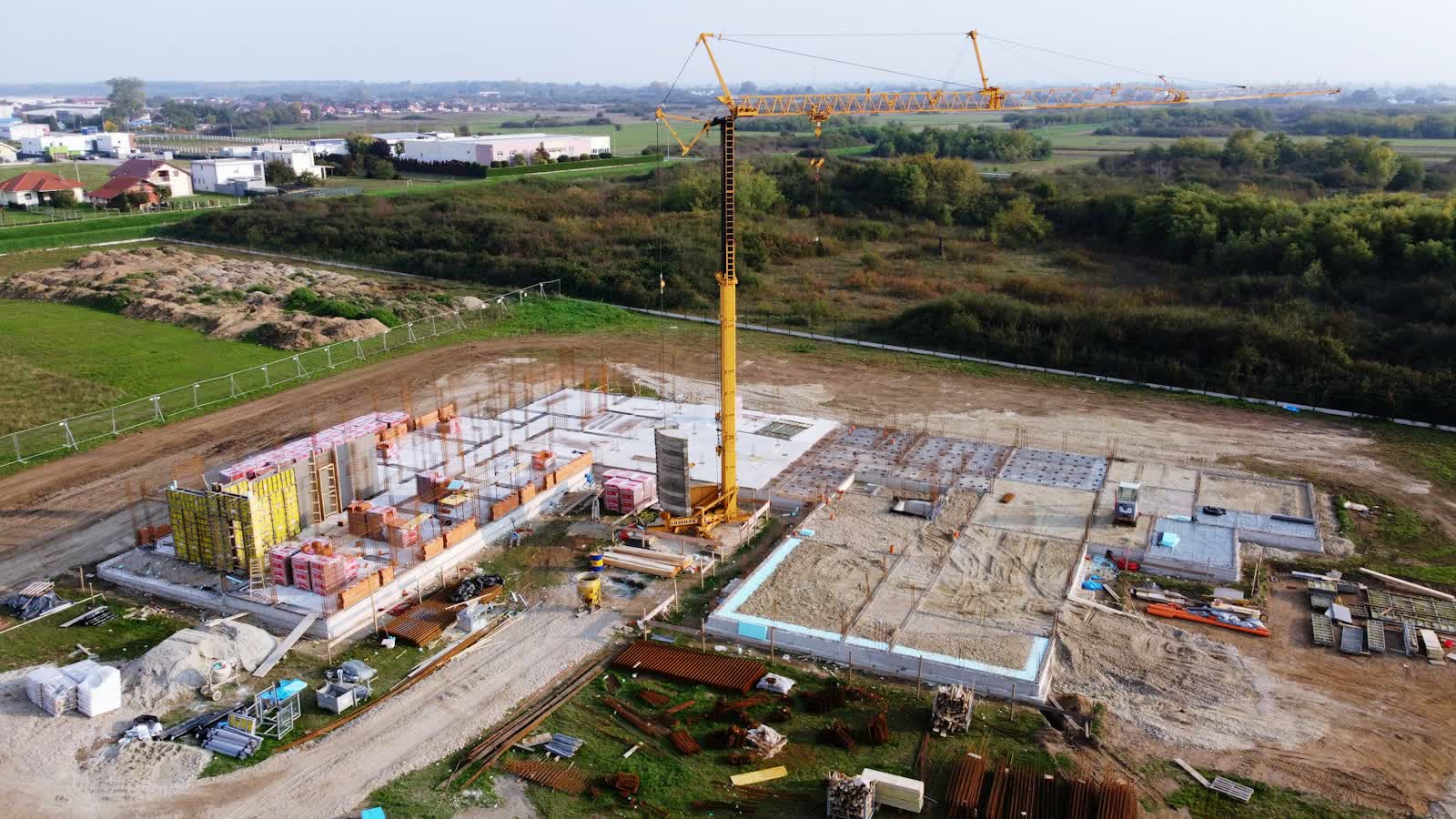
Before the first module, the drone documents what will soon be invisible. Ground preparation: initial condition (useful at end of operation, when the site must be restored), tracks, fencing, drainage — earthworks volumes are computed by photogrammetry at each visit. Foundations: driving tens of thousands of piles is the schedule-critical item; the georeferenced orthophoto counts piles installed per zone, checks positions against the execution drawings and keeps a dated record of difficult areas (refusals, soil replacement). Networks: trenches and ducts are photographed before backfilling — as-built surveys of buried networks done as the site progresses avoid costly searches during operation.
The value of regular photogrammetric site monitoring is documented: Nicolás Jacob-Loyola and colleagues showed in 2021 in Sensors how periodic drone surveys, compared against the schedule in a 4D BIM environment, objectify a site's real physical progress and improve communication between parties (see the study). On a solar farm the subject is ideal: everything is visible from the sky.
Racking and modules: count, don't estimate
Once piling starts, the site becomes an open-air assembly line: racking, then modules, then DC cabling, junction boxes, inverters and substations. At each drone visit, the orthophoto counts precisely the tables erected and modules laid, zone by zone and subcontractor by subcontractor — no more declarative progress percentages. Gaps between zones leap out, bottlenecks (deliveries, crews) show up a week earlier, and the monthly report to the lender rests on defensible data. It is the same principle as our construction progress monitoring, applied to a perfectly countable subject.
The flight itself is simple — open, often rural ground — but two preparation points matter: coordination with the site scheduler and site rules (overflying working crews remains prohibited; slots align with breaks or free zones), and contractual recurrence: one visit per month in normal phases, weekly during peaks (piling, module laying), with identical deliverables from one visit to the next so comparisons are automatic.
Commissioning and operation: thermography takes over
At commissioning, the drone changes sensor: acceptance thermography sweeps the whole field to detect faulty modules, open strings, hot spots and connection defects — the inspection framed by the IEC 62446-3 standard, detailed in our guide to solar plant thermography. Done before reserves are lifted, it shifts the cost of early-life defects to the builder; repeated during operation, it becomes the plant's preventive maintenance tool. Research validated light drones for PV plant inspection very early: the team of Paolo Bellezza Quater, Francesco Grimaccia, Sonia Leva, Marco Mussetta and Mohammadreza Aghaei laid the groundwork in 2014 in the IEEE Journal of Photovoltaics (see the study).
The same close-out file should include the final orthophoto and 3D model of the site: reference condition of tracks and fencing, exact position of every asset, the basis of the operating digital twin. And on the investor side, independent inspection before buying an existing plant falls under technical due diligence.
2026 prices
Orders of magnitude observed in France in 2026 (excl. VAT), for a plant of a few dozen hectares:
- Full initial condition survey (orthophoto, digital terrain model, reference volumes): €1,500 to €3,000.
- Monitoring visit (orthophoto, counts, comparative report): €800 to €1,500, tapering on a monthly subscription over the build.
- Trench as-built surveys (on demand, as the site progresses): often folded into the monitoring visit when planned with the scheduler.
- Acceptance thermography: priced per MWp — see the dedicated guide for the ranges.
Set against a solar farm's budget these amounts are marginal; set against what they secure — objectified delay penalties, documented foundations, quantified reserves at handover — they rank among the project's best insurance policies. Request a quote stating the area, the provisional schedule and the deliverables your lenders expect.
Put it into practice
- Drone construction site monitoring: rates and cities covered from €250
- Construction site monitoring in Annecy Auvergne-Rhône-Alpes
- Construction site monitoring in Rouen Normandie
- Construction site monitoring in Tourcoing Hauts-de-France