Drones in construction: structure, roof, facade and site inspection
Buy — €15 Contents and free extract
VAT included · secure Stripe payment · instant access: by paying you request immediate access to the digital content and acknowledge you lose your right to cancel.
C-DRONE GUIDE · 21 AUGUST 2026
Energy savings certificates (CEE) and drone thermography: financing the envelope audit and works
A leaking industrial roof costs money every winter, but the works needed to fix it can be partly financed without waiting on a dedicated budget: that is the whole point of France's certificats d'économies d'énergie (CEE, energy savings certificates), the country's main funding mechanism for energy renovation, open to companies and local authorities alike. The catch is knowing what it actually funds — and it is not the diagnosis. Drone-based aerial thermography does not sit inside any CEE standardised sheet in its own right, but it is what locates and costs the heat losses that make a file admissible and a works budget justifiable. Here is how the two fit together, what the scheme's sixth period changes in 2026, and the method for turning a thermography flight into a financing file.
Published on 21 August 2026, updated on 22 September 2026 — regulations in force as of September 2026.
The CEE scheme in 2026: the mechanism and its sixth period
Created by France's 2005 POPE act, the CEE scheme runs on a polluter-pays logic: energy suppliers — electricity, gas, heating oil, LPG, motor fuels — known as "obligés" (obligated parties), must reach a volume of energy savings expressed in cumac kWh (cumulative and discounted over the measure's lifetime), or pay a penalty to the Pôle national des CEE (PNCEE), which sits under France's Directorate General for Energy and Climate. To reach it, they fund — directly or through delegated third parties and agents — energy-saving works for companies, local authorities and households, in the form of premiums or contributions.
The scheme's sixth period (P6) runs from 1 January 2026 to 31 December 2030 and raises the national target to 5,250 TWh cumac, around 1,050 TWh cumac a year — a rise of nearly 70% on the fifth period. That acceleration comes with tighter control and traceability requirements on files, which raises the value of costed, documented diagnostics over rough estimates.
What CEE actually funds — and where the drone fits in
Two routes give access to CEE funding. Standardised operations follow a sectoral sheet published by ministerial order — prefix BAT for residential and commercial buildings, IND for industry, AGRI for agriculture, RES for networks, among others — which sets a flat-rate cumac kWh gain for a specific measure: roof insulation, network lagging, window replacement, waste-heat recovery. Specific operations, outside any sheet, cover more complex or large-scale projects; their CEE volume is calculated case by case and validated by the PNCEE, based on a technical file demonstrating the actual gain.
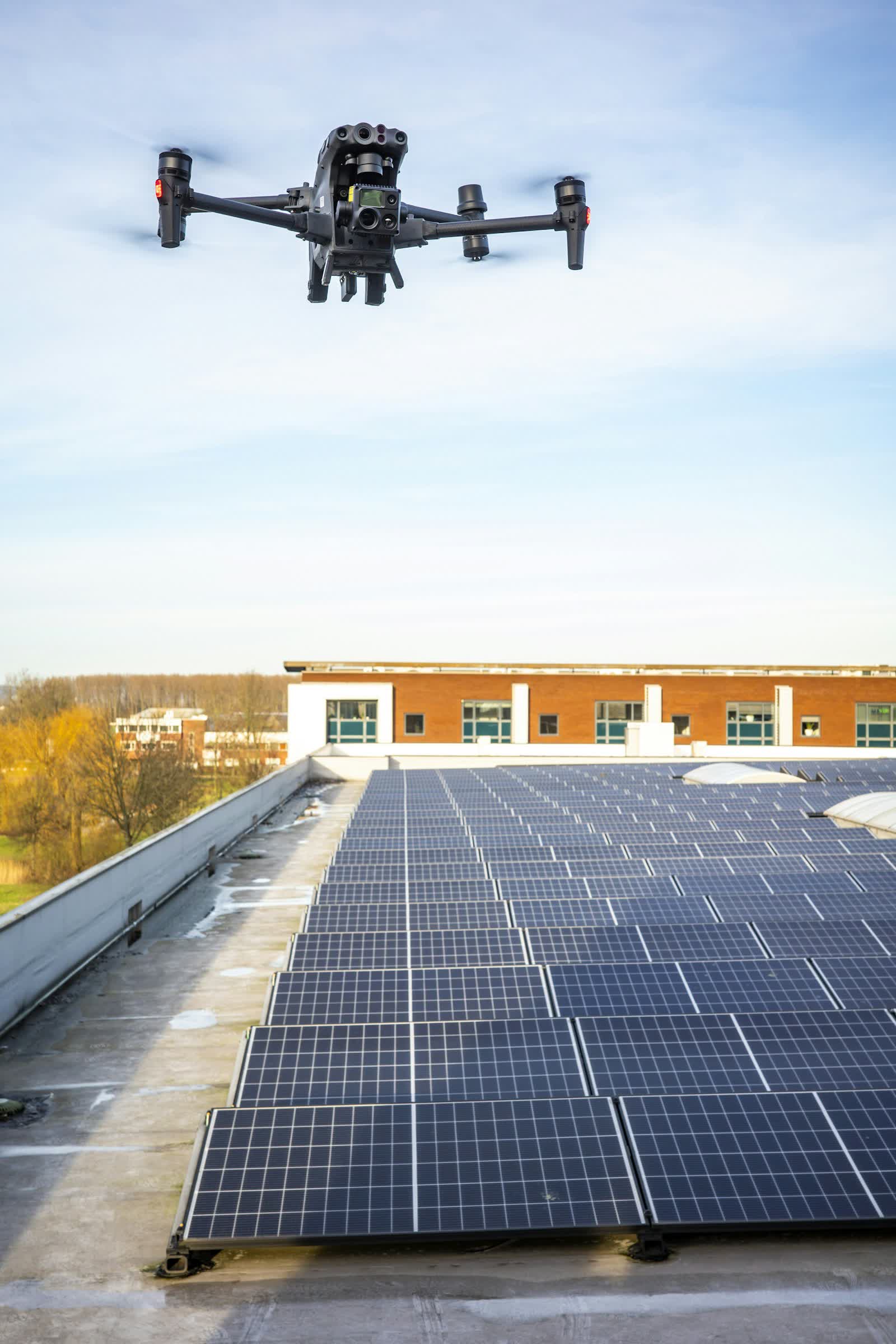
Drone-based aerial thermography does not appear in any of these sheets: it is not an energy-saving measure, it is a diagnostic service. Its role lies elsewhere, and it is decisive: upstream, it identifies and ranks loss zones across a roof or facade spanning several thousand square metres — an exercise a ground survey cannot match for completeness — which sizes the works programme that is genuinely eligible and avoids funding insulation that is oversized or wrongly targeted. Downstream, a post-works thermographic re-check provides the visual, costed proof of the gain, often required by the delegated party before the premium is paid, especially on a specific operation where demonstrating the result carries more weight than on a standardised sheet. That reliability is not just anecdotal: a landmark study published in 2011 in the journal Applied Energy by Paris Fokaides and Soteris Kalogirou establishes that infrared thermography can accurately determine a building envelope's overall heat transfer coefficient (U-value), a quantitative figure that translates directly into a kWh gain calculation (see the study).
From thermography to a CEE file: the method and the order that matters
The process follows a precise sequence. First, the thermography flight: a thermal pass at the time of day when the indoor/outdoor temperature gap is greatest, paired with visible imagery, to produce a radiometric report that locates every anomaly and estimates its loss in kilowatts. That report then feeds a targeted works quote — insulating the highest-loss zones first rather than uniformly redoing the whole roof. Next comes the step most often overlooked: the premium application file must be lodged with an obligated party or a CEE delegated agent before the works quote is signed — this is a strict rule of the scheme, and a project started before that prior agreement loses its eligibility, whatever the quality of the diagnosis behind it.
Once the works are done, a re-check — thermographic in most cases — documents the result and releases payment. This chain fits particularly well with companies already subject to a regulatory energy audit under the NF EN 16247 standard, which we cover in our guide to the regulatory energy audit for companies: the building component of that audit and a CEE file's pre-diagnosis rest on the same thermal data, which lets the two flights be pooled into one. On an industrial site, the same principle applies to network lagging: see our guide on factory steam network insulation thermography.
2026 pricing (excl. VAT) and the timeline to respect
The thermography flight itself is not funded by the CEE scheme: its cost stays with the site, within the ranges observed for an aerial thermography service, generally €500 to €1,800 excl. VAT depending on the area covered, the number of buildings and access complexity. A post-works re-check on the same points usually costs less than the first pass, since the flight protocol is already defined. Some delegated agents agree to fold that diagnostic cost into their overall offer when the volume of funded works justifies it: this is negotiated case by case with the engineering firm or energy company building the file.
Timing matters as much as price: P6 runs to 2030, giving multi-year visibility, but the requirement to lodge an application before any works commitment means the diagnosis has to be scheduled ahead — booking a thermography flight several weeks before the intended works date, not the other way round. For a commercial site already covered by the French tertiary decree, the envelope's thermal audit can feed both the regulatory obligation and the CEE file: see our guide on the French tertiary decree and drone thermography. The simplest way to start a mission is to request a quote stating the area to cover and the planned works timeline, so the flight is scheduled before the file is committed.
Put it into practice
- Drone aerial thermal imaging: rates and cities covered from €500
- Aerial thermal imaging in Bourges Centre-Val de Loire
- Aerial thermal imaging in Fréjus Provence-Alpes-Côte d'Azur
- Aerial thermal imaging in Saint-Quentin Hauts-de-France